
Using Your Hot Tub All Winter in South Dakota: The Complete Cold-Weather Owner's Guide
Sub-zero nights are the best time to own a hot tub — if the spa is set up for it. Here is how Splash City customers in Sioux Falls, Sioux City and Rapid City run their spas from November through April without freeze damage or shocking power bills.
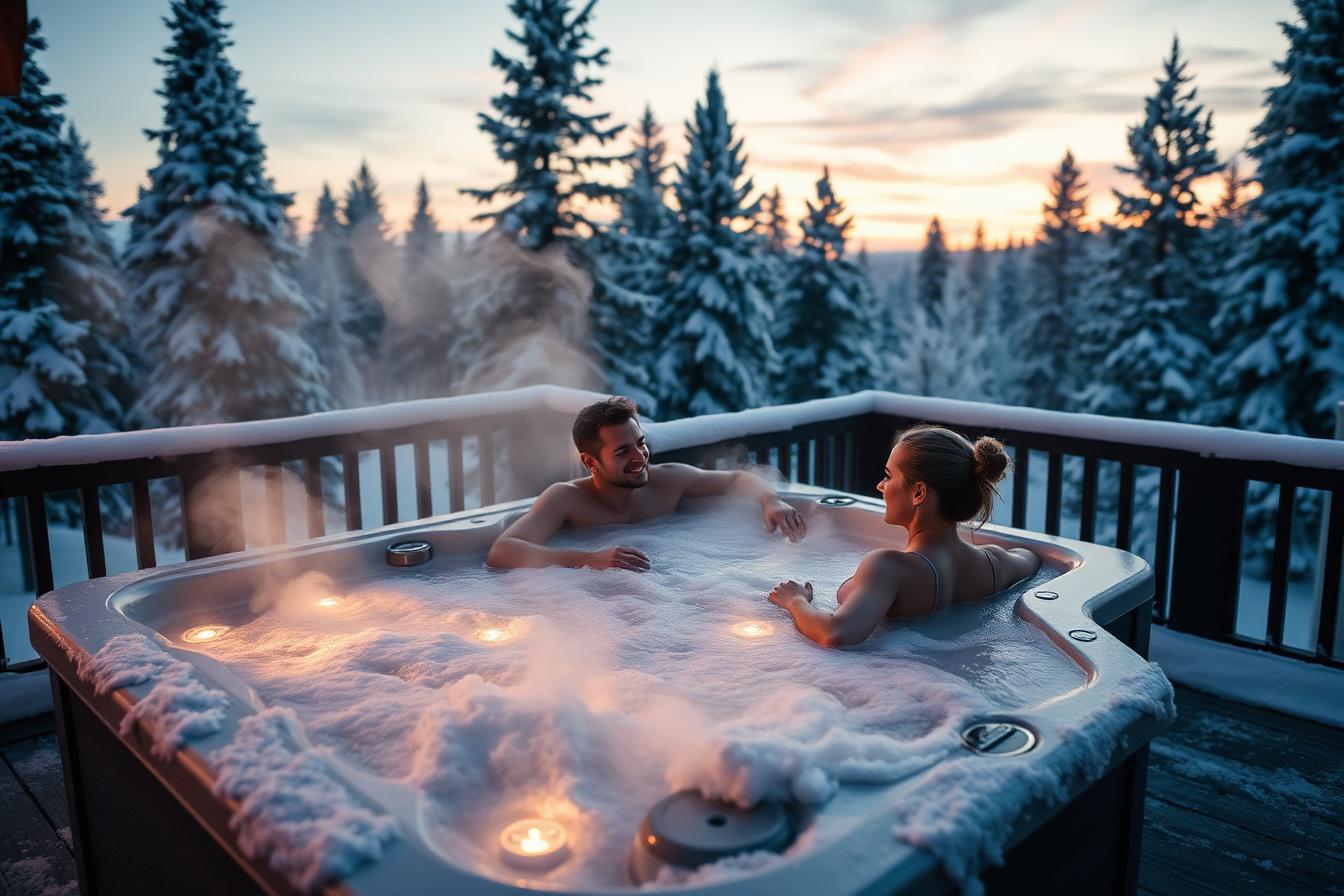
Ask any long-time hot tub owner in the Upper Midwest which season they use their spa the most and the answer is almost never July. It is January. There is nothing quite like sitting in 102-degree water while the thermometer on the deck rail reads six below and steam curls off the surface into the pines. Winter is the payoff season for a hot tub — the months when the purchase stops being a luxury and starts being the reason you actually go outside.
But winter is also the season that punishes shortcuts. A spa that was never leveled properly, a cover that soaked up water two summers ago, a filter nobody has rinsed since Labor Day, an equipment bay stuffed with a beach towel instead of insulation — these are the things that turn a beautiful January soak into a service call and a four-figure repair bill. In our showrooms across Sioux Falls, Sioux City and Rapid City, the same handful of winter problems come through the door every year, and nearly all of them are preventable in an afternoon.
This guide walks through everything we tell customers who are heading into their first cold season with a spa: how the equipment actually behaves when it gets cold, what freeze protection does and does not do, how to keep operating costs sane, how to handle snow and ice safely, what your water chemistry does differently at low ambient temperatures, and what to do if the power goes out. If you own a hot tub in the Dakotas or western Iowa, this is the winter playbook.
Why winter is the best season to own a hot tub
The therapeutic value of hot water does not change with the calendar, but your body's response to it does. In summer, a 100-degree soak on a 90-degree evening is pleasant but muted; the temperature differential between the water and the air is small, so the vasodilation response — the widening of blood vessels that drives the warm, loose, heavy-limbed feeling people chase — is gentler. In winter, that differential can be 100 degrees or more. The contrast is dramatic, the muscle release is faster, and the effect lasts longer after you get out.
There is also a practical argument. Cold, dry Midwestern winters are hard on joints and harder on sleep. Warm-water immersion in the 90 minutes before bed raises core temperature and then allows it to drop, and that drop is one of the strongest natural sleep cues the body has. Owners routinely tell us the winter routine — twenty minutes in the spa, a warm towel, straight to bed — is the single most reliable sleep intervention they have ever tried.
Finally, winter is when a backyard is otherwise dead space. From November to April, most yards in South Dakota go unused. A hot tub is the one piece of outdoor equipment that gets more attractive as the temperature falls, and that changes how a household relates to the whole property. The deck lights go on, the path gets shoveled, and people go outside on a Tuesday in February.
How a modern spa actually handles sub-zero weather
Modern spas from Jacuzzi, Sundance, American Whirlpool and Vita Spas are engineered as year-round appliances. Full-foam or multi-layer insulation packages, insulated cabinets, sealed equipment bays, and thick tapered covers all work together to hold heat and, just as importantly, to trap the waste heat the pump motor produces. In a well-built spa, the pump running for filtration is also a small heater.
The critical concept for cold-climate owners is freeze protection, sometimes called smart winter mode. The control pack watches water and equipment-bay temperature. If either drops toward a threshold, the system automatically starts the circulation pump — regardless of your programmed filter schedule — to keep water moving through the plumbing. Moving water freezes far more slowly than still water, and circulating water also carries heater output into every line.
That protection is real, and it works. But it depends on three things: the spa has power, the water level is high enough for the pump to prime, and the plumbing is not already blocked by a clogged filter or a closed valve. Every catastrophic freeze we have ever been called out to has failed at one of those three points. Freeze protection is not magic; it is a pump that needs electricity, water and an open path.
It is also worth understanding what a spa does not do. It does not sense a torn cover, it does not know that a jet has been left open to the air, and it does not compensate for insulation that was removed and never put back. Those are owner responsibilities, and they are the reason we push a fall walkthrough every year.
- Keep the spa energized 24/7 — never switch off the breaker for the season while water is in the shell.
- Maintain the water line above the highest jet; low water is the number one cause of failed freeze protection.
- Rinse filters monthly in winter; a restricted filter starves the circulation pump.
- Confirm the equipment bay door and any insulation blankets are closed and intact before the first hard freeze.
The fall walkthrough: forty-five minutes that prevent most winter service calls
Before the first sustained freeze — mid-October in most of our market — do a deliberate walkthrough. Start with the cover. Lift one end and judge its weight. A dry, healthy cover on a mid-size spa should be manageable for one adult. If it takes two people, the foam core has absorbed water. That water freezes, adds hundreds of pounds, splits the vapor barrier, and destroys the cover's R-value at exactly the moment you need it most. A waterlogged cover can raise a winter electric bill by 30 to 50 percent on its own, which means a replacement cover often pays for itself in a single season.
Next, inspect the skirt and equipment bay. Look for gaps at the base of the cabinet where wind can reach the plumbing, rodent nests in the insulation, and any place a previous service visit left a panel loose. Wind infiltration is a bigger heat thief than ambient cold; a spa in an exposed yard on the prairie loses far more energy than the same spa tucked behind a windbreak.
Then check the water. Fresh water before winter is one of the highest-value habits an owner can build. Drain, clean the shell, replace or deep-clean the filters, and refill in October so you start the season with balanced, low-TDS water. Nobody wants to change water at 10 degrees in January, and water that starts the winter chemically tired will fight you for five months.
Finally, look at the surroundings. Where will snow slide off the roof? Is the path to the spa going to be a sheet of ice by December? Are the steps stable on frozen ground? Winter safety around a spa is mostly a site problem, not a spa problem.
What a hot tub really costs to run in a Dakota winter
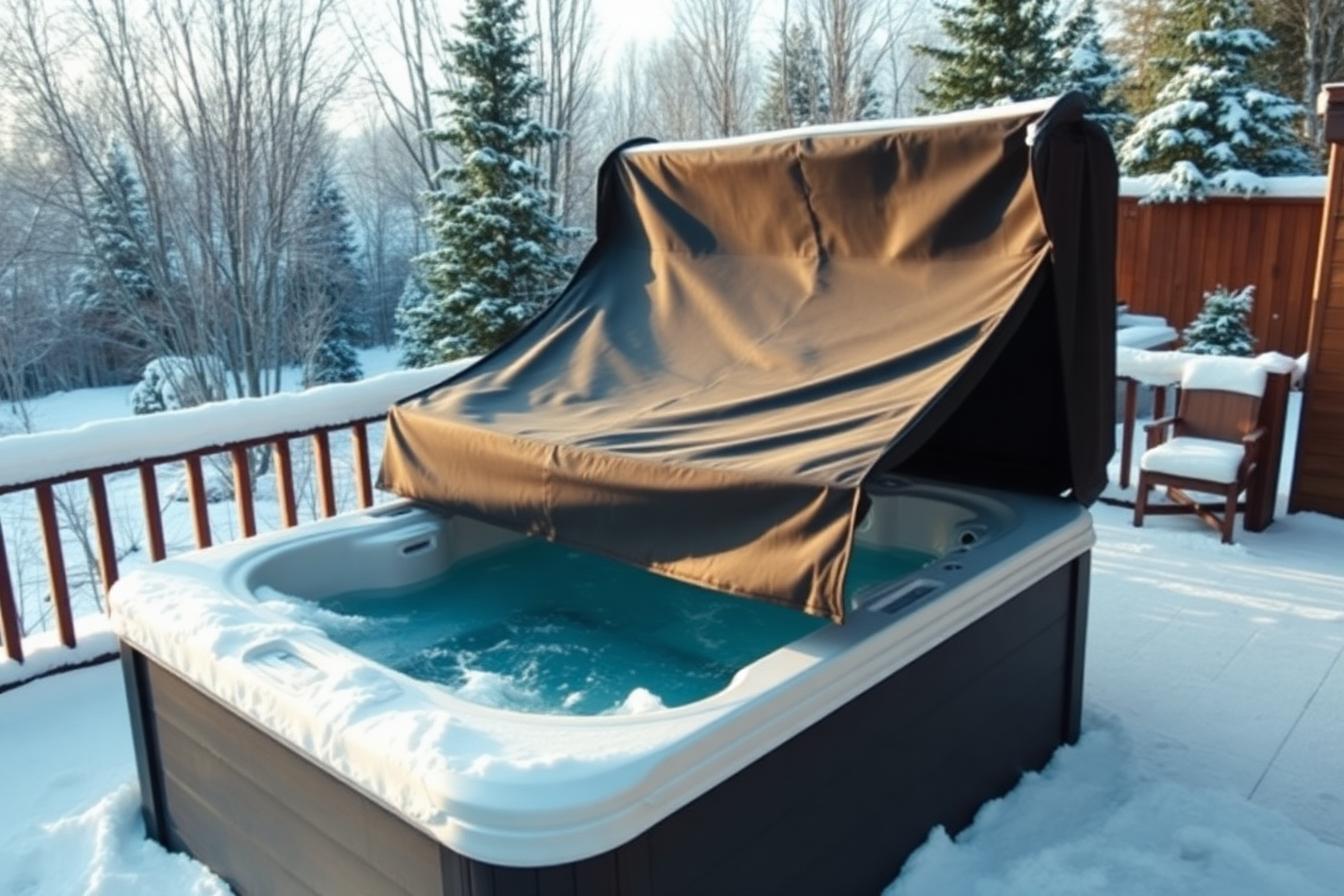
This is the question every buyer asks and almost nobody answers honestly, because the honest answer is a range. A well-insulated, properly covered 400-gallon spa held at 100 degrees through a South Dakota winter typically costs somewhere between $30 and $60 a month in electricity. The same spa with a waterlogged cover, a set of clogged filters, and a set point of 104 can easily double that.
The drivers are simple physics. Heat loss happens overwhelmingly through the surface of the water — which is why the cover matters more than any other component — and secondarily through the cabinet walls and plumbing. Wind increases surface loss dramatically. Every degree of set point increases the differential the heater must maintain. And every hour the cover is off at 5 degrees costs meaningfully more than an hour off at 70 degrees.
The practical levers are equally simple. Drop the set point two degrees; most people cannot tell the difference between 102 and 100 in winter, and the savings are measurable. Use a floating thermal blanket under the main cover. Run filtration cycles during off-peak hours if your utility offers time-of-use rates. Add a windbreak — even a section of privacy fence or a row of arborvitae on the prevailing-wind side changes the math. And keep the cover latched, because an unlatched cover in a 30 mph prairie wind lifts just enough to vent heat continuously.
One thing we do not recommend: lowering the temperature drastically when you are away for a week. Reheating 400 gallons from 80 to 102 consumes more energy than holding it, and it leaves the plumbing closer to freezing while you are not there to notice a problem. Set it back two or three degrees at most.
- Replace a waterlogged cover before winter — usually the largest single savings available.
- Add a floating thermal blanket under the cover for an extra insulating layer.
- Hold the set point at 100 rather than 104 during the coldest months.
- Create a windbreak on the exposed side of the spa.
- Keep filters clean so the circulation pump is not fighting restriction.
Winter water chemistry is different — here is how
Cold air does not change the chemistry inside the shell, but winter behavior does. Bather load typically goes up in the cold months. The cover stays on more, so there is less passive off-gassing and less UV exposure. Rain and snowmelt no longer dilute the water. And because nobody wants to stand outside testing strips at 10 below, testing frequency quietly collapses. The result is a predictable January pattern: rising total dissolved solids, drifting pH, and a spa that suddenly foams or smells despite a full sanitizer reading.
Build a routine that survives the cold. Keep a test kit and your chemicals inside the house, not in an unheated shed where liquid products can freeze and granular products can cake. Test twice a week rather than daily, but do it consistently, ideally right before a soak when you are already dressed for it. Shock after heavy use rather than on a fixed calendar — three couples on a Saturday night is a bigger load than a solo soak every evening for a week.
Watch alkalinity first. Total alkalinity is the buffer that keeps pH stable, and when it drifts low the pH begins bouncing, which is what causes the classic winter complaint of itchy skin and cloudy water that will not clear no matter how much sanitizer goes in. Correct alkalinity, then pH, then sanitizer — in that order, always.
Finally, respect the ozone and UV systems if your spa has them. They reduce chemical demand substantially, but they work on water that passes through the circulation loop. If you have shortened filter cycles to save energy, you have also shortened the time your secondary sanitation runs. Balance those two goals rather than optimizing only for the power bill.
Snow, ice and the physical realities of a winter spa
Snow on a spa cover is not automatically a problem — a few inches acts as additional insulation. Heavy, wet accumulation is a different story. Most residential covers are rated for a modest snow load, and a foot of March slush can exceed it, bowing the core and eventually cracking the center seam. Brush snow off with a broom, never a shovel, and never stand or kneel on the cover to reach the middle.
Ice around the spa is a genuine hazard, because the environment creates it: people get out wet, water drips on the deck, and it freezes instantly. Keep a bin of pet-safe, non-corrosive ice melt at the door — avoid rock salt near the shell and equipment — and lay down rubber mats on the approach path. A cover lifter is worth its price in winter alone, since it eliminates the wrestling match that leads to slips.
Think about where roof snow lands. Every winter we see at least one spa cover destroyed by an avalanche of ice off a metal roof or a gutter. If the spa sits under an eave, a snow guard or a relocation is cheaper than an annual cover replacement.
Keep a path shoveled to the equipment bay, not just to the steps. If something goes wrong at 11 p.m. in a blizzard, you want to be able to reach the breaker and the pump without excavating three feet of drift.
Power outages: the one true emergency
A hot tub can sit unheated for a surprisingly long time before it is in danger. A full, well-insulated spa with a good cover loses only a few degrees per day in cold weather. The rough guideline we give owners is that you have roughly 24 to 48 hours of margin at typical January temperatures before freeze risk becomes real, and less if the outage happens during an extreme cold snap or if the spa is older and lightly insulated.
If the power goes out, first do nothing dramatic. Keep the cover closed and latched, throw a couple of moving blankets or a tarp over the top for extra insulation, and monitor. If the outage looks like it will run past a day and temperatures are below about 20 degrees, take action: either restore power with a generator sized for the spa's requirements, or drain the system.
Draining is not just pulling the drain plug. Water sitting in the pump housing, heater manifold and jet lines is what actually cracks components. A proper emergency drain-down means opening every drain point, removing pump unions, blowing lines with a shop vac, and leaving valves open. If you are not confident doing that in the dark and cold, call us — a service visit is dramatically cheaper than a cracked heater assembly and a replaced pump.
Once power returns to a drained spa, do not simply energize it. Refill first, purge air from the plumbing, and then power up. Running a heater dry is one of the fastest ways to destroy it.
- Keep the cover closed and add extra insulation immediately.
- 24-48 hours is typical margin; less below zero or with an older spa.
- If draining, drain everything — pump, heater and all lines, not just the shell.
- Never re-energize a dry spa; refill and purge air first.
Building the winter ritual
The owners who get the most from a spa in winter are the ones who make it frictionless. That means a cover lifter so opening takes ten seconds, a hook for robes inside the back door, a bin of towels within reach, a light on the path, and slip-on shoes you can wear on frozen decking. Every point of friction you remove converts to more soaks per month, and more soaks per month is the entire return on the investment.
Set a rhythm. Many of our customers land on 8:30 p.m., four or five nights a week, twenty minutes, no phones. Some pair it with a short cold rinse afterward for the contrast effect. Others use the spa in the morning before work for stiffness. There is no correct protocol; the correct protocol is the one you will actually repeat in February.
Hydrate more than you think you need to. Winter air is desiccating, hot water is dehydrating, and the combination sneaks up on people. Keep water — not alcohol — at the spa side, and step out sooner than you think if you feel light-headed.
And use the season socially. A February hot tub is one of the few genuinely appealing reasons to invite people over in the dead of a Midwestern winter. That is not a maintenance tip, but it is the reason most people bought the thing.
When to call for service
Some winter symptoms are worth a phone call the same day rather than a wait-and-see approach. A heater that runs constantly without holding temperature usually means a flow problem, a failing element or a sensor issue, and each of those gets worse rather than better. Error codes indicating flow — FLO, FL1, dr, dry and similar depending on the manufacturer — should stop you immediately, because the control pack has already detected that water is not moving as it should.
Other red flags: a noticeable drop in water level over a few days, ice forming anywhere on the plumbing visible in the equipment bay, a burning or hot-plastic smell, a GFCI that trips repeatedly, or jets that lose pressure suddenly. In cold weather each of these has a shorter fuse than it would in July, because the consequence of a stalled system is freeze damage rather than just an inconvenience.
Splash City's service department covers South Dakota, northwest Iowa and southwest Minnesota with factory-trained technicians who work on Jacuzzi, Sundance, American Whirlpool, Vita Spas and most other major brands, including spas we did not sell. If you are not sure whether something is urgent, call and describe it. Diagnosing over the phone costs nothing, and in winter the cost of waiting is real.
Frequently asked questions
Talk to the Splash City team
Showrooms in Sioux Falls, Sioux City and Rapid City. Bring a water sample, a room measurement or a backyard photo — we will help you plan it.
Flexible monthly payments with quick approvals and competitive rates — apply in minutes.