Sauna vs. Cold Plunge: How to Build a Contrast Therapy Routine at Home
Heat, cold, and the deliberate alternation between them have moved from elite locker rooms into ordinary backyards. Here is what the practice actually involves, how to size a home setup, and how to build a protocol you will still be doing in a year.
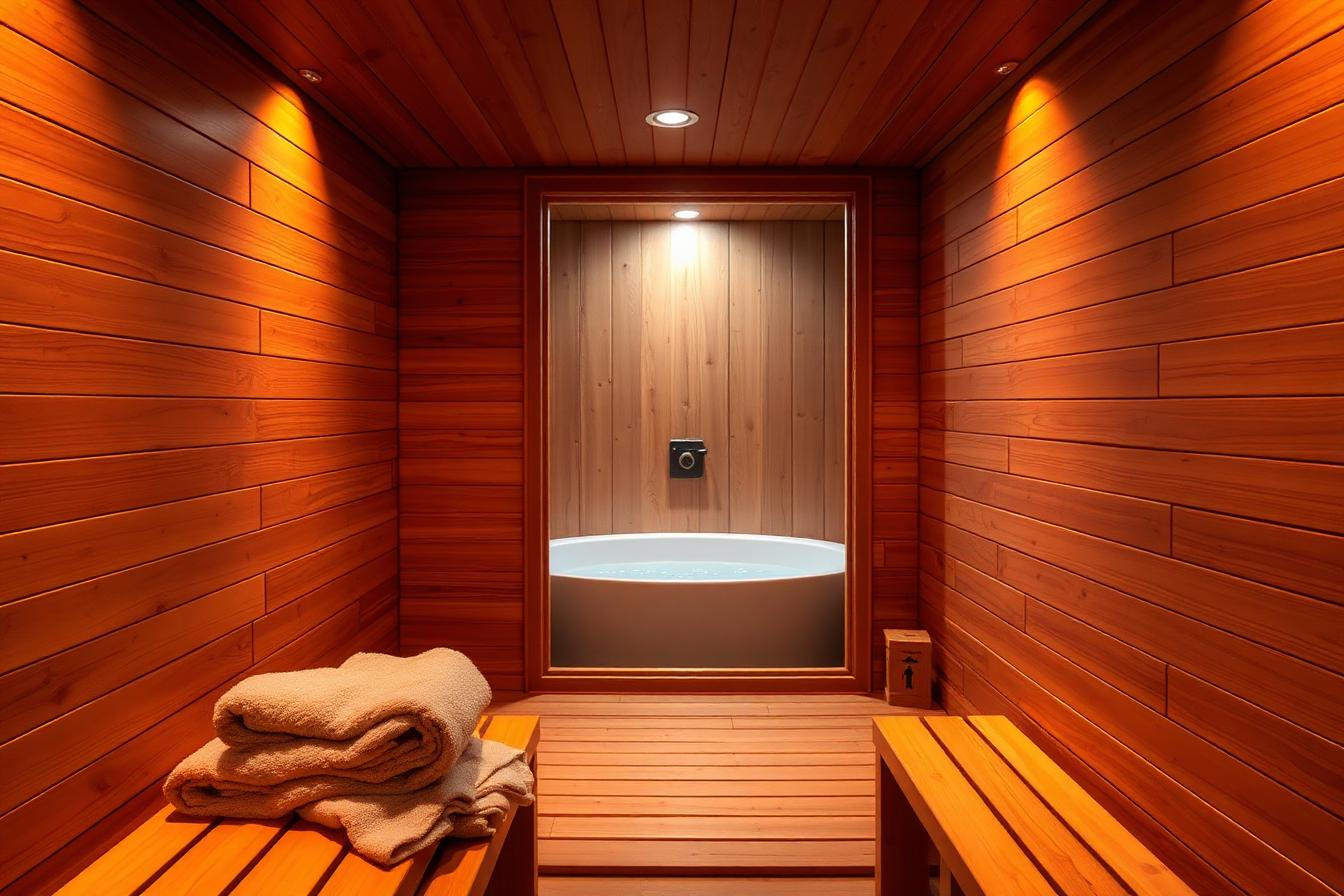
Ten years ago, if you wanted to alternate a sauna session with an ice bath you needed a gym membership, a Nordic spa, or a stock tank and forty pounds of ice from the gas station. Today a serious home setup — a two-person infrared sauna and a chilled, filtered plunge tub — fits in the corner of a basement or a covered patio and runs on standard household circuits.
The interest is not a fad, and it is not only about athletes. The people walking into our showrooms asking about saunas and cold plunges are overwhelmingly ordinary adults in their thirties through sixties dealing with the same three things: stiff, aching bodies from desk work and yard work, poor sleep, and a general sense that recovery does not happen on its own after forty the way it did at twenty.
This article covers what heat and cold exposure actually do, how traditional and infrared saunas differ in ways that matter for a home installation, what a real cold plunge requires versus what an ice-filled tub gets you, how to design the space, and how to structure a routine that survives contact with a busy week. Splash City carries Jacuzzi and Sun & Soul saunas and Kodiak cold plunges across our Sioux Falls, Sioux City and Rapid City showrooms, and much of what follows comes from watching what customers stick with.
What heat exposure does to the body
Sitting in a hot room raises core temperature and triggers a cascade of responses that closely resemble moderate cardiovascular exercise. Heart rate climbs, peripheral blood vessels dilate, blood volume shifts toward the skin, and the body begins sweating to shed heat. Cardiac output rises substantially during a typical session, which is the reason researchers describe sauna bathing as a passive cardiovascular stressor.
The best-documented benefits come from large Finnish cohort studies that followed thousands of men across decades and found strong dose-response associations between frequent sauna use and lower cardiovascular mortality. Those are observational findings, not proof of causation, and Finland's sauna culture differs from a fifteen-minute infrared session in a Sioux Falls basement. But the mechanistic story — improved vascular function, reduced blood pressure, favorable changes in heart rate variability — is consistent across the smaller controlled trials.
There are more immediate effects too, and these are what keep people using a sauna. Heat relaxes muscle tissue and reduces the sensation of stiffness. It appears to help with delayed onset muscle soreness after hard training. And for many people it produces a distinct psychological downshift — twenty minutes in a hot, dim, quiet wooden room with no screen is one of the few remaining contexts in modern life where nothing is asked of you.
Heat is also a sleep tool. Like a hot tub, a sauna session in the evening raises core temperature; the subsequent drop as the body cools is a strong sleep-onset signal. Users commonly report deeper sleep on sauna nights, which is one of the most consistently reported subjective benefits in the literature.
Traditional versus infrared: the real differences
A traditional sauna heats the air. Electric or wood-fired stoves bring a room to 160-200 degrees Fahrenheit, and you can ladle water onto rocks to create steam — löyly — which raises perceived heat dramatically. The experience is intense, the sweat comes fast, and the humidity control is in your hands.
An infrared sauna heats you directly. Carbon or ceramic emitters produce infrared radiation absorbed by the body, so the same core-temperature effect happens at a far lower air temperature, typically 120-150 degrees. The sessions are longer and gentler, the environment is easier for people who find traditional saunas overwhelming, and the perceived heat is more tolerable for anyone with respiratory sensitivity to very hot air.
For home installations, the practical differences usually decide it. Infrared cabins plug into a standard 120V or a dedicated 20-amp circuit, weigh little, assemble in a couple of hours, need no drain, no vent and no special ceiling height, and heat up in fifteen minutes. That combination makes them viable in a spare bedroom, a finished basement corner or a garage. Traditional electric saunas generally need a 240V circuit, benefit from proper ventilation, take 30-45 minutes to heat, and are a bigger construction project.
Neither is objectively better. If your reference experience is a Finnish or Nordic sauna and steam is the point, get a traditional unit and budget for the electrical work. If your goal is a repeatable four-times-a-week habit in an ordinary house, infrared removes most of the friction, and friction is what determines whether wellness equipment gets used or becomes furniture.
- Traditional: 160-200°F air, steam capability, 240V, longer heat-up, more intense.
- Infrared: 120-150°F air, direct radiant heat, often 120V, 15-minute heat-up, gentler and longer sessions.
- Hybrid cabins combine both technologies for people who want the option of either.
What cold exposure actually does
Immersion in water in the 45-55 degree range produces an immediate, unmistakable physiological response: a gasp reflex, a spike in heart rate and blood pressure, peripheral vasoconstriction, and a surge of noradrenaline that can reach several times baseline. That noradrenaline surge is the mechanism behind the most reliably reported effect of cold plunging — the sharp elevation in alertness and mood that persists for hours afterward.
The evidence for cold water and mood is stronger and more consistent than the evidence for cold water and physical recovery. In fact, one of the more counterintuitive findings in the sports science literature is that cold immersion immediately after resistance training may blunt some of the adaptive signaling that drives muscle growth. If your goal is hypertrophy, plunge on rest days or several hours after lifting, not immediately after your last set.
For inflammation, soreness and perceived recovery, cold does help, especially after high-volume endurance work or contact sport. And for the large group of people who are not training for anything and simply want to feel more awake, more resilient and less stiff, the practice tends to deliver on its own terms.
Cold exposure is also a deliberate stress-tolerance practice. Voluntarily entering water that every instinct tells you to avoid, then controlling your breathing until the panic subsides, is a trainable skill that people describe as transferring into other domains. That is difficult to measure in a lab and easy to notice in yourself after a month.
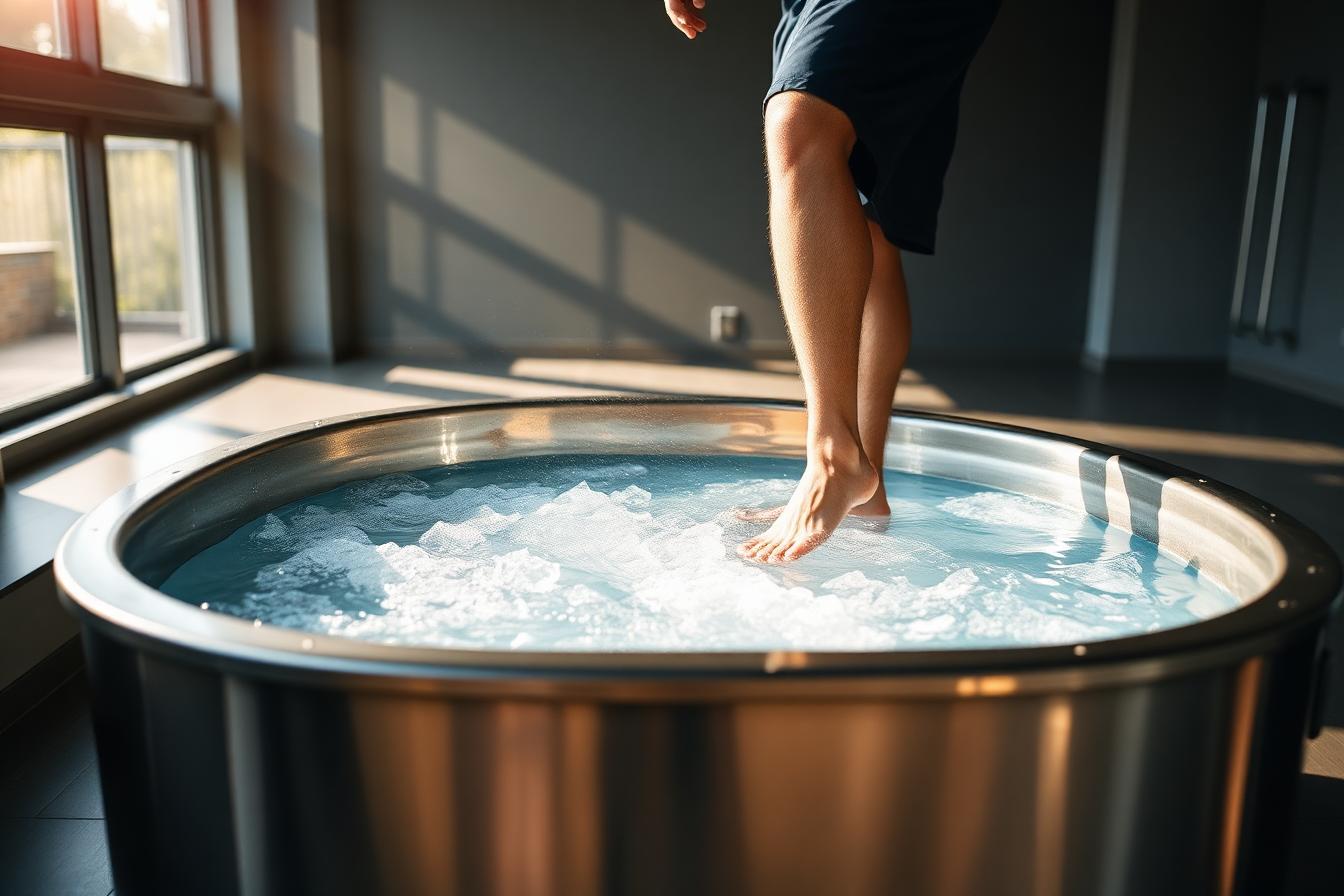
A real cold plunge versus a tub full of ice
You can absolutely start with a stock tank, a chest freezer conversion or a purpose-built inflatable, and plenty of people do. What you get is the experience at a low entry price. What you do not get is temperature consistency, filtration, sanitation, or convenience — and those three things are exactly what determine whether the habit survives past week six.
A dedicated plunge like the Kodiak line integrates a chiller, circulation, filtration and sanitation into an insulated shell. You set a temperature and the unit holds it, so a 48-degree plunge is 48 degrees on Tuesday morning without you doing anything. Filtration and ozone or UV keep the water clean between changes, which matters more than people expect in water too cold to sanitize with normal chlorine kinetics.
The ice-bath approach costs roughly $10-$20 per session in bagged ice once you account for a real dose of cold, and it requires the one thing most people do not have at 6 a.m., which is fifteen spare minutes and a willingness to go get ice. Run that math over a year of three sessions a week and the chilled unit stops looking expensive.
There is also a durability and safety argument. Plunge tubs designed for the purpose have proper drains, non-slip surfaces, secure lids that keep children and pets out, and electrical components rated for wet environments. A converted freezer in a garage is an improvised electrical device holding 80 gallons of water.
- Chilled units hold a set temperature with no ice, no guesswork.
- Integrated filtration and sanitation keep water usable for weeks.
- Insulated shells and secure covers reduce running cost and improve safety.
- DIY setups work as a trial but rarely survive as a long-term habit.
Designing the space
The best home wellness setups share one trait: heat and cold are within a few steps of each other, and both are within a few steps of a shower or a drain. Contrast therapy means moving between them repeatedly, and if that transition involves crossing a cold garage barefoot or dripping through a carpeted hallway, the routine dies quietly.
For indoor installations, the two constraints are floor and moisture. Sealed concrete, tile or luxury vinyl plank handle water; carpet and unfinished hardwood do not. A floor drain is ideal but not required if the plunge has a drain hose route and you keep a mat and towels staged. Ventilation matters more for traditional saunas and for any space where a plunge will be uncovered regularly.
For outdoor or three-season installations — a covered porch, a screened room, a garage bay — think about winter. A plunge outdoors in a Dakota January will need essentially no chiller, but it does need freeze management for its plumbing, and an infrared cabin should be rated and installed for the temperature and humidity swings it will see.
Then think about the sensory environment, because it is not decoration. Dimmable warm lighting, a speaker, a hook for robes, a bench for towels and a timer you can see from inside the cabin make the difference between equipment and a room people want to be in. Every showroom customer who tells us their sauna gets used daily has spent some thought on the room around it.
Protocols that people actually stick with
Start conservatively. For heat, that means 10-15 minutes in an infrared cabin at 130 degrees or 8-12 minutes in a traditional sauna at 175, and stopping well before you feel unwell. For cold, it means 60-90 seconds at 50-55 degrees. Both tolerances build quickly over two to three weeks.
A standard contrast cycle is 15 minutes hot, 1-3 minutes cold, repeated two or three times, ending on cold if you want alertness or on heat if you are heading to bed. Total session time lands around 45 minutes. Many people find two full contrast sessions a week plus two or three heat-only sessions is the sustainable ceiling for a working adult.
Breathing is the entire skill in cold water. The gasp reflex on entry is involuntary; the recovery from it is trainable. Exhale as you enter, keep the exhale long, and let the shoulders drop. Do not hyperventilate before entry, and never combine breath-holding practices with immersion — that combination has killed people.
Frequency beats intensity. Four moderate sessions a week produce far more benefit than one heroic session, and the dose-response data on sauna use points in the same direction: it is the number of sessions per week that tracks with outcomes, not how much you suffered in any one of them.
- Beginner heat: 10-15 min infrared at 130°F, or 8-12 min traditional at 175°F.
- Beginner cold: 60-90 seconds at 50-55°F.
- Contrast cycle: hot, then cold, repeated 2-3 times, about 45 minutes total.
- End on cold for alertness, on heat for sleep.
- Hydrate before and after; electrolytes help after long heat sessions.
Safety, contraindications and honest limits
Both heat and cold are cardiovascular stressors, and that is the point — but it also means anyone with cardiovascular disease, uncontrolled blood pressure, arrhythmia, or who is pregnant should talk to a physician before starting. The same applies to people on medications that affect blood pressure, thermoregulation or fluid balance, including many common diuretics and beta blockers.
Alcohol and heat are a genuinely dangerous combination. Alcohol impairs thermoregulation, promotes dehydration and blunts your judgment about when to get out. The same goes for cold immersion, where impaired judgment plus a cold-shock response is a drowning risk. Never plunge alone if you are new to it, and never plunge after drinking.
Watch for the warning signs during heat: dizziness, nausea, headache, confusion or a racing heart that does not settle. Get out immediately, sit down, cool off and rehydrate. In cold water, the signs to respect are numbness spreading beyond the extremities, loss of fine motor control in the hands, and uncontrollable shivering that does not stop within a few minutes of getting out and warming up.
Finally, keep expectations calibrated. Contrast therapy is not a treatment for disease, it will not offset a poor diet or chronic sleep deprivation, and the more dramatic online claims about detoxification and immunity outrun the evidence. What it reliably does is make people feel meaningfully better on a daily basis, support cardiovascular health as part of a broader routine, and give a household a reason to spend forty-five deliberate minutes offline several times a week. That is more than enough.
What a home setup costs and where to start
A quality two-person infrared cabin generally starts in the low thousands and rises with size, emitter technology, wood species and features like chromotherapy and audio. Traditional electric saunas span a wide range depending on whether you buy a prebuilt cabin or build a room, and the electrical work is a real line item. A chilled, filtered cold plunge is typically the more expensive single piece because of the refrigeration system.
Most households do not buy both at once, and they should not. Start with the one that addresses your primary complaint. If you want sleep, recovery and a warm ritual through a long winter, start with heat. If you want morning alertness, mood and stress tolerance, start with cold. Add the second piece six months later once the first one has proved it gets used.
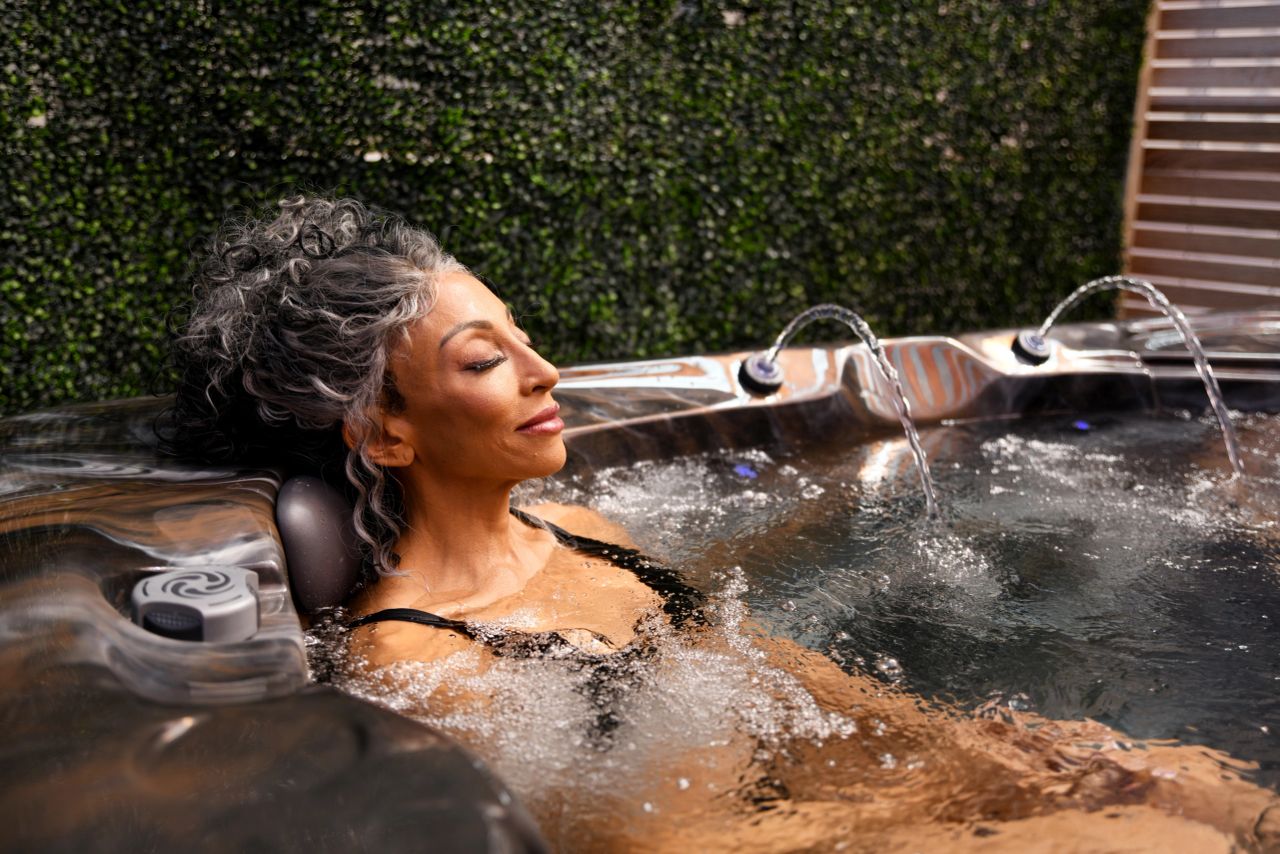
If you already own a hot tub, you already have half of a contrast setup. A hot tub at 102 degrees plus a plunge at 50 is a legitimate and very pleasant contrast protocol, and it is how a lot of our customers get started without buying a sauna at all.
The best way to choose is to sit in them. All three Splash City showrooms have saunas on the floor, and our team can walk you through electrical requirements, footprint, and delivery for your specific room before you commit to anything.
Frequently asked questions
Talk to the Splash City team
Showrooms in Sioux Falls, Sioux City and Rapid City. Bring a water sample, a room measurement or a backyard photo — we will help you plan it.
Flexible monthly payments with quick approvals and competitive rates — apply in minutes.