The Complete Pool Table Buying Guide: Slate, Size, Cloth, Room Fit and Installation
A pool table is furniture you will own for thirty years. Here is how to judge slate and frame quality, calculate the room size you actually need, choose cloth and cushions, and avoid the installation mistakes that ruin otherwise good tables.
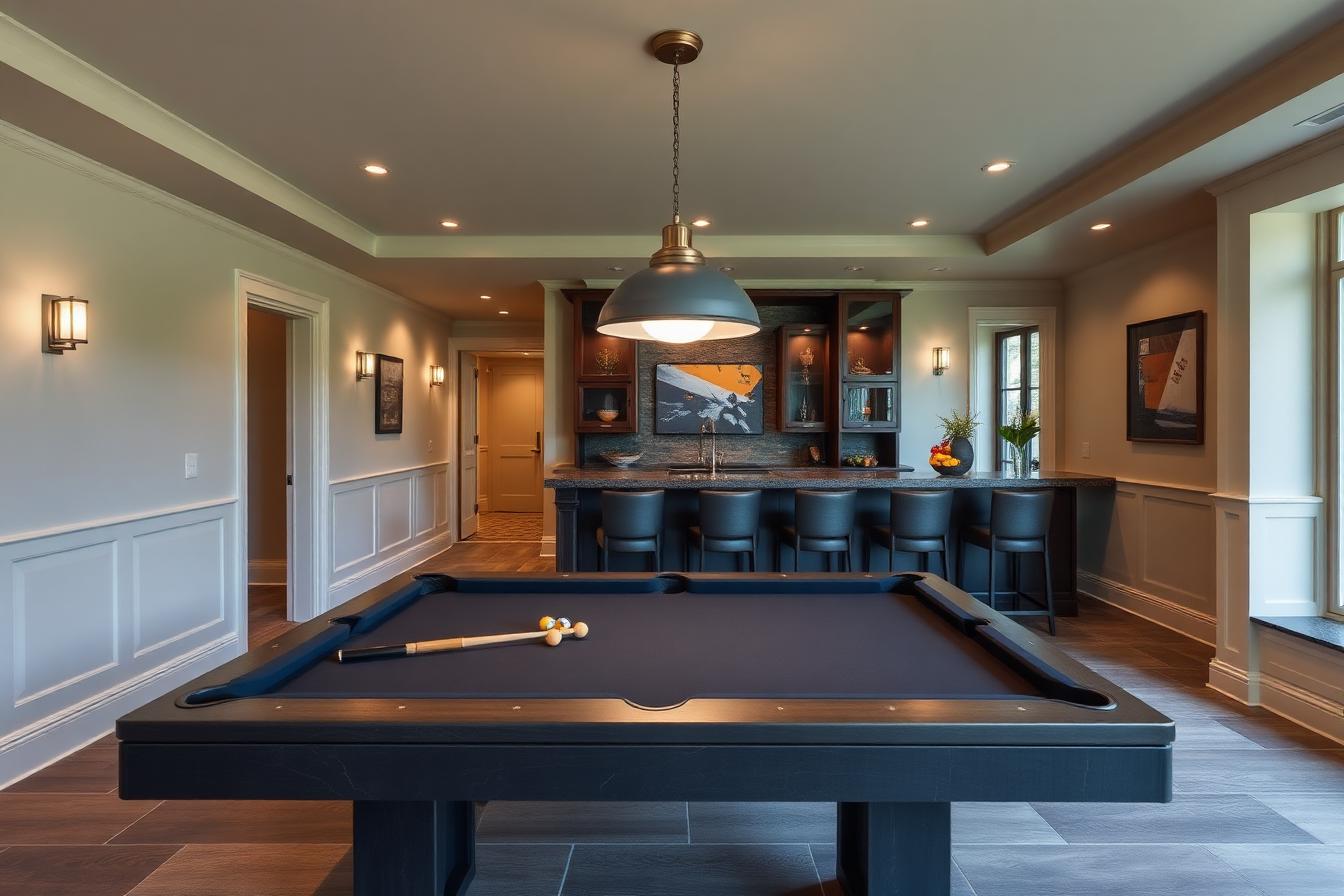
Almost nobody buys two pool tables in a lifetime. A well-built table with a one-inch slate bed and a properly engineered frame will outlive the room it is installed in, get recovered two or three times, move houses once or twice, and still play true in 2060. That longevity is exactly why the buying decision deserves more attention than most people give it — the cheap table is not a cheap table, it is a thirty-year commitment to a table that plays badly.
The market makes this harder than it should be. Online listings advertise 'slate-look' beds, 'tournament' cloth that is nothing of the sort, and dimensions that quietly omit whether you can actually shoot from the rail. Meanwhile the genuinely important specifications — slate thickness and grade, frame construction under the slate, cushion rubber quality, pocket type — are rarely mentioned at all.
This guide covers what separates a lifetime table from a disposable one, how to measure a room correctly before you fall in love with an eight-foot model, how playing surface size and cloth choice change the game, what installation and leveling actually involve, and how to keep a table playing well for decades. Splash City carries Brunswick and Callee tables and accessories, and our installers have set up tables in basements, garages, lofts and lake houses across the region.
Slate is the whole game
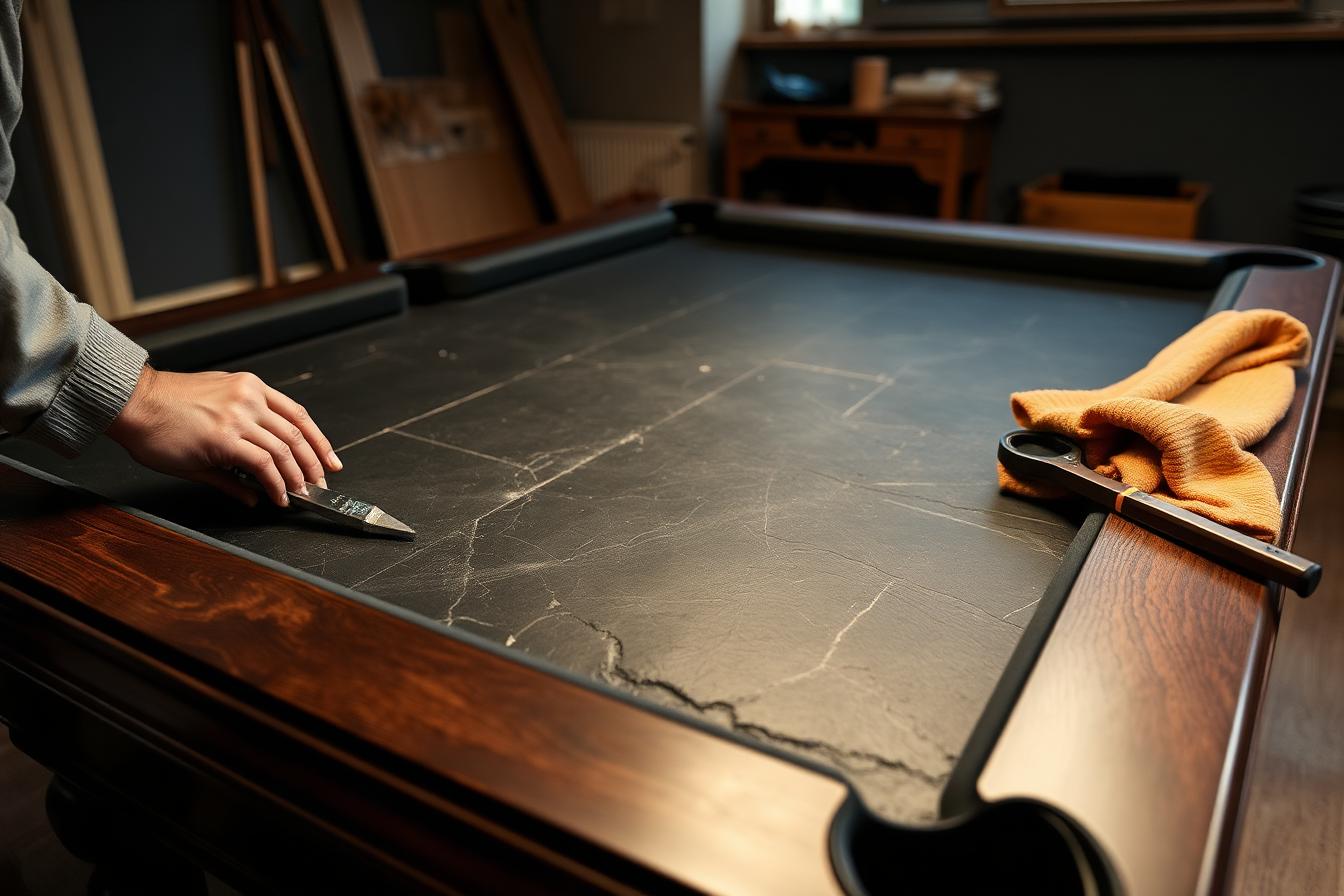
The playing bed of a real pool table is quarried slate, ground flat, and nothing else performs the same way. Slate is dense, dimensionally stable, resistant to warping with humidity changes, and can be machined dead flat within thousandths of an inch. Every alternative — MDF, particleboard, 'slatron,' honeycomb composites — will develop a roll within a few years, and once the bed is not flat, the table is no longer a pool table. It is a piece of furniture that balls roll across in unpredictable ways.
Thickness matters. One-inch slate is the standard for quality residential and commercial tables and is what tournament play requires. Three-quarter-inch is acceptable in lighter tables but is more prone to flex if the frame beneath it is inadequate. Half-inch slate exists and should be avoided; it needs continuous support to stay flat and rarely gets it.
Most quality tables use three-piece slate rather than one solid piece. This is not a compromise — it is better. Three pieces can be individually shimmed and leveled to a precision that a single monolithic slab cannot, and they can be carried into a basement by human beings. The seams are filled with beeswax during installation and become completely invisible and imperceptible under the cloth. A one-piece slate table is generally a sign of a bar-style or coin-operated design, not a premium residential one.
Ask whether the slate is backed and framed. Premium tables mount slate to a wood backing that is bonded to the stone, which allows staples to secure the cloth and provides additional rigidity. Unbacked slate requires glue-on cloth, which makes recovering messier and more expensive down the road.
- Insist on genuine quarried slate — never MDF or composite.
- One-inch thickness is the quality standard; avoid half-inch.
- Three-piece slate levels better than one-piece and fits through doorways.
- Wood-backed slate makes recovering easier and cheaper long-term.
What is under the slate matters as much as the slate
Slate is heavy — a one-inch three-piece set for an eight-foot table runs roughly 600 to 800 pounds — and it will find every weakness in the structure beneath it. A quality table has a full perimeter frame with cross-beams supporting the slate seams, built from solid hardwood or heavy engineered lumber, joined mechanically rather than stapled.
Look underneath before buying. If the frame is thin, if the cross-members do not land under the slate joints, or if the assembly relies on particleboard, walk away regardless of what the top looks like. This is where budget tables save money, and it is the failure that cannot be fixed later: an under-supported table will drift out of level continually no matter how many times you shim it.
Legs should be substantial and should bear on the frame, not merely bolt to a skirt. Pedestal-style bases need a wide enough footprint to resist the rocking that happens when players lean on the rails. Adjustable leg levelers are useful but should be a fine-tuning tool, not the primary way the table achieves level.
Weight is a reasonable proxy for quality here. A serious eight-foot table lands somewhere around 800 to 1,000 pounds assembled. If a listing describes an eight-foot 'slate' table at 300 pounds, the specification is not what it appears to be.
Sizing: measure the room, then choose the table
The most common and most expensive mistake in this category is buying a table that fits the room but not the game. You need clearance for the cue behind every shot, and that clearance is determined by cue length, not table size. A standard cue is 58 inches; you need roughly five feet of clear space on all four sides of the playing surface for comfortable full-stroke shooting.
The math is simple: add ten feet to the playing surface length and ten feet to the width. A seven-foot table (39 x 78 inches of playing surface) needs about 13 by 16.5 feet. An eight-foot table (44 x 88) needs about 13.5 by 17.5 feet. A pro eight (46 x 92) needs about 13.8 by 17.8. A nine-foot table (50 x 100) needs roughly 14.5 by 18.5 feet.
Measure the room to obstructions, not to walls. Support posts, stair openings, low soffits, bar counters and door swings all reduce usable clearance. Measure ceiling height too — you need enough room to raise a cue for jump and masse shots, and low basement ceilings with ductwork are a common surprise.
If the room is genuinely tight, the answer is a shorter cue rather than a smaller table you will outgrow. Fifty-two- and forty-eight-inch cues let you play comfortably in constrained corners, and most serious home rooms keep a couple on the wall. That said, if the shortfall is more than a foot on any side, size down. Playing an eight-foot table in a room that fits a seven is unpleasant every single game.
- 7-foot table: about 13 x 16.5 feet of clear room.
- 8-foot table: about 13.5 x 17.5 feet.
- Pro 8-foot: about 13.8 x 17.8 feet.
- 9-foot table: about 14.5 x 18.5 feet.
- Measure to obstructions and check ceiling height, not just floor area.
Cloth, cushions and pockets
Cloth comes in two broad categories. Woolen or napped cloth — the classic fuzzy green felt most people picture — is inexpensive, forgiving, and slows the ball noticeably. Worsted cloth, the tightly woven material used in tournament play, is faster, more consistent, more accurate on cut shots and thin hits, and considerably more durable. Once you have played on good worsted cloth, napped cloth feels like playing in sand.
For a home table, worsted is worth the upgrade if anyone in the household plays seriously. Expect to recover every five to ten years in a home setting, sooner if the table sees heavy use or if drinks and food are part of the room's culture.
Cushions are the underappreciated component. Quality tables use natural gum rubber cushions to a recognized profile, typically K-66 or K-55 depending on table style. Good rubber gives a lively, predictable rebound; cheap synthetic rubber dies within a few years, producing dead rails that absorb the ball instead of returning it. Dead rails are repairable but the repair costs a meaningful fraction of a decent table's price.
Pockets are mostly a style decision. Drop pockets — leather or netted baskets you empty by hand — suit traditional and residential rooms. Ball-return systems gather everything at one end and are convenient for high-traffic rooms and for anyone who does not want to walk the table between racks. Neither affects play. What does affect play is pocket cut and facing angle, which determine how forgiving the table is; tournament-cut pockets are tighter and less forgiving than typical residential cuts.
Style, materials and living with a table
A pool table is the largest single object in most rooms it occupies, and it will define the space. Traditional tables in oak, cherry or mahogany with turned legs and leather drop pockets suit finished basements and classic bar rooms. Contemporary designs with clean lines, metal accents and matte finishes read better in modern open-plan spaces. Rustic and reclaimed-timber styles have become popular in lake homes and lodge-style rooms.
Cloth color is a bigger design decision than people expect, since it is the single largest color field in the room. Classic green and burgundy sit comfortably in traditional spaces; charcoal, navy, steel grey and black work in contemporary rooms and hide wear better. Lighter colors show chalk dust quickly.
Think about lighting early. A proper pool table light — a fixture spanning most of the table length, hung roughly 32 to 36 inches above the playing surface — eliminates shadows across the bed. Overhead recessed cans alone will cast the player's own shadow onto the shot, which is the most common lighting complaint we hear after installation.
Plan the surrounding furniture too. Bar stools or spectator seating along one wall, a cue rack that keeps sticks straight and off the floor, a wall-mounted scoreboard, and a small table for drinks that is not the rail of the pool table. Every one of those items protects the table and improves the room.
Delivery, installation and leveling
A pool table is not a furniture delivery. It arrives disassembled, gets carried in as components — frame, three slates, rails, cabinet — and is assembled in place by installers who then level it. Attempting a self-install to save money is the single most common way people ruin a good table, and slate is both extremely heavy and surprisingly easy to crack when handled wrong.
Professional installation involves assembling and squaring the frame, setting and shimming each slate section to level, screwing the slate down, filling the seams with beeswax and sanding them flush, stretching and securing the cloth without wrinkles or over-tension, mounting the rails to a consistent torque, and checking level again in multiple directions across the bed.
Leveling is done with a machinist's level, not a carpenter's bubble level, and it happens across the whole surface — not just corner to corner. A table can be level end-to-end and still have a low spot in the middle if the slate was not shimmed correctly. Ask any installer how they check level and how many measurement points they use; the answer tells you a lot.
Plan access before delivery day. Measure doorways, stairwell turns, ceiling clearances and any tight corners. Slate sections for an eight-foot table are roughly 30 by 45 inches and weigh over 200 pounds each. Basement installations with a switchback stair or an exterior walkout with a tight landing sometimes need extra crew, and it is much better to know that in advance.
- Always use professional installers — slate is heavy and easy to crack.
- Leveling requires a machinist's level and multiple measurement points.
- Measure doorways, stair turns and landings before delivery day.
- Expect three to five hours for a proper installation.
Care that keeps a table playing true
Brush the cloth in one direction, from the head of the table toward the foot, with a proper table brush. Never use a vacuum with a beater bar, and be careful with handheld vacuums on napped cloth. Brushing after each session takes a minute and roughly doubles cloth life by removing chalk dust before it grinds into the fibers.
Cover the table when it is not in use, especially in a room with windows. UV fades cloth unevenly, and dust is abrasive. A fitted vinyl or leatherette cover also prevents the thing that ends more cloth than anything else in home rooms: a spilled drink.
Keep the room's humidity reasonably stable. Slate does not care, but the wood frame, rails and cabinet do — extreme swings can loosen joinery over years. Basements in our climate often benefit from a dehumidifier in summer regardless of whether there is a pool table in them.
Have the level checked every couple of years, and after any move or any significant settling in the house. New construction in particular tends to settle for the first several years, and a table that was perfect at installation can develop a subtle roll. Re-leveling is a modest service call and completely restores play.
Chalk your cue, keep the tips maintained, and replace worn tips before they mushroom. And establish a no-sitting-on-the-rails rule early. Rails are cantilevered and repeated weight on them loosens the bolts and eventually the cushion bond.
Budgeting and where the money goes
Quality residential slate tables generally start in the low four figures and climb well into five figures for premium designs with exotic woods, custom finishes and specialty pockets. The spend is roughly distributed across three things: the slate and frame, which determine how it plays; the cabinetry and finish, which determine how it looks; and the brand's engineering and support, which determine whether parts and service exist in fifteen years.
Do not economize on the first category to afford more of the second. A plain-looking table with one-inch slate, a solid frame and good cushions is a genuinely great table. A beautifully finished table with thin slate on a weak frame is a piece of furniture with a game printed on top.
Budget separately for installation, a proper light fixture, a cover, a cue rack, a decent set of cues, and a ball set. Those accessories commonly add up to more than people plan for, and skimping on cues in particular undercuts the table — house cues that are warped or have bad tips make even a perfect table frustrating.
Financing is available on game room purchases, and many households find it makes sense to buy the table they will keep rather than the table they can pay cash for this month. Our team can walk through options alongside the room measurement.
Frequently asked questions
Talk to the Splash City team
Showrooms in Sioux Falls, Sioux City and Rapid City. Bring a water sample, a room measurement or a backyard photo — we will help you plan it.
Flexible monthly payments with quick approvals and competitive rates — apply in minutes.