How to Cut Hot Tub Running Costs in a South Dakota Winter
Learn practical ways to lower your winter hot tub energy cost in South Dakota and Iowa, from covers and insulation to smart heat pump controls.
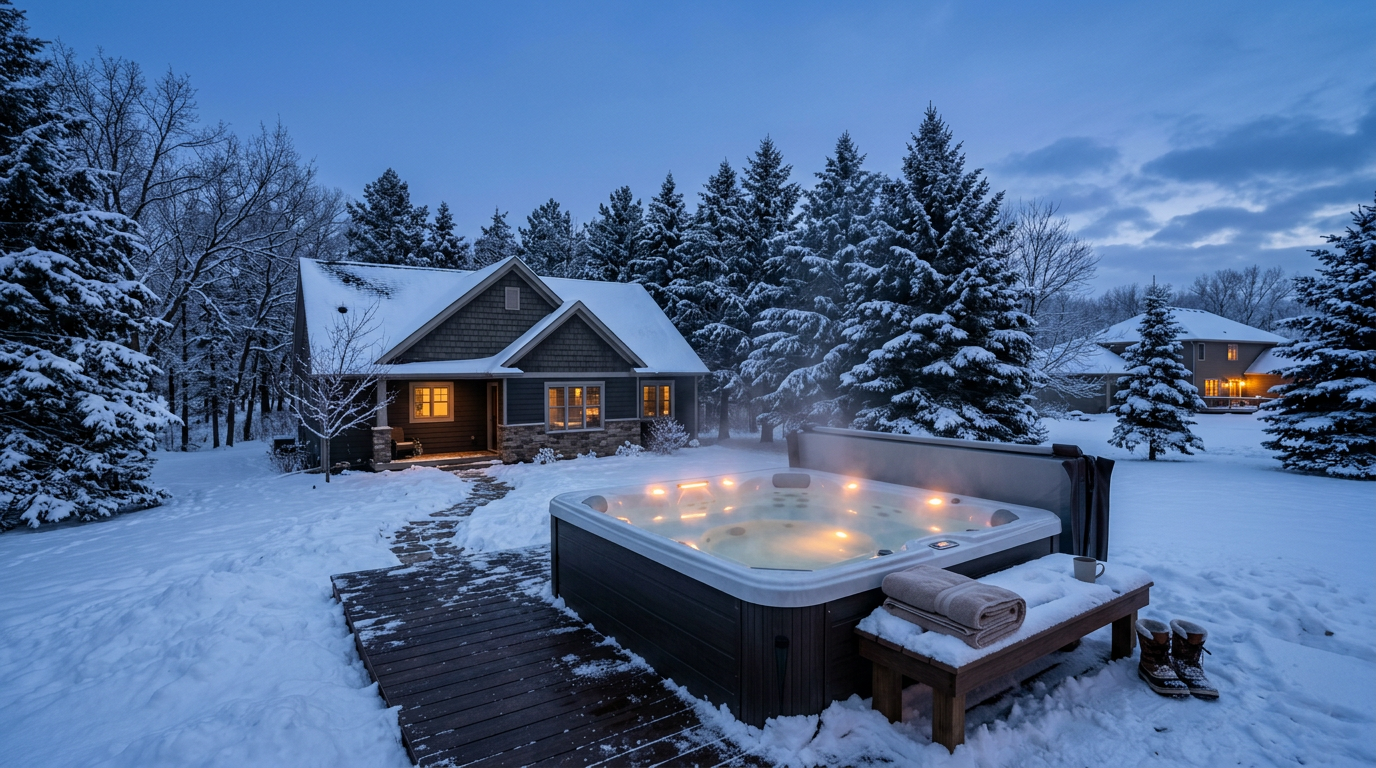
Living in the Upper Midwest means experiencing true winter weather, with freezing temperatures stretching from November through April across South Dakota and Iowa. While there is nothing quite like soaking in hot water while snow falls around you, many homeowners worry about the impact cold air has on their monthly electricity bill. Understanding how to manage your spa running cost during sub-zero stretches is essential for comfortable year-round enjoyment. With a few practical upgrades and smart daily habits, you can keep your water steaming hot without overspending on utility bills.
At Splash City, our family-run team has helped homeowners across Sioux Falls, Sioux City, and Rapid City keep their equipment running efficiently through decades of severe winter conditions. Whether you own a Jacuzzi, Sundance Spas, American Whirlpool, Vita Spas, or Sun & Soul model, proper energy management keeps operational costs predictable. The key to reducing energy loss is not turning the heat down to extreme lows, but rather locking warmth inside the cabinet and eliminating unnecessary thermal loss. Modern engineering gives you total control over how efficiently your tub holds its heat.
In this guide, we break down the practical steps every South Dakota and Iowa hot tub owner should take before the heavy winter frosts arrive. From insulation ratings and high-density cover upgrades to smart temperature control and air valve management, these steps protect both your wallet and your equipment. Let us look at how you can optimize your setup and accurately calculate your hot tub energy cost this winter season.
Understanding Winter Energy Demands in the Upper Midwest
Winter in South Dakota brings sustained sub-zero temperatures, intense wind chill, and rapid heat loss that tests any outdoor equipment. In areas like Rapid City and Sioux Falls, overnight lows frequently dip well below zero degrees Fahrenheit for consecutive weeks. Because hot tubs maintain water temperatures between 100 and 104 degrees, the temperature differential between the water and ambient air can exceed 100 degrees. This extreme gap forces your spa heater to draw significantly more kilowatt-hours to maintain set temperatures than it does during mild autumn months.
The main driver of electricity consumption during Upper Midwest winters is thermal transfer through evaporation and cabinet exposure. Water naturally wants to equalize with the cold outdoor air, releasing steam rapidly whenever the water surface meets freezing temperatures. Additionally, relentless prairie winds strip warmth directly from the exterior cabinet panels if the unit is unshielded. Recognizing these regional environmental conditions helps you address the primary sources of heat loss rather than relying on trial-and-error fixes.
Many regional homeowners assume that shutting down their spa or lowering the temperature drastically between uses saves money, but this approach often backfires. Reheating hundreds of gallons of water from 80 degrees back up to 102 degrees requires prolonged heater engagement that can spike your utility rate. Maintaining a consistent thermal balance is far more efficient for modern spa systems than forcing the heater to recover from deep temperature drops. By focusing on insulation density and evaporative control, you create a stable thermal envelope that holds heat efficiently.
The Role of High-Density Cabinet and Shell Insulation
The foundation of an energy-efficient hot tub starts inside the cabinet, where high-performance insulation prevents warmth from escaping into the surrounding cold air. Hot tub insulation varies significantly between basic foam sprays and engineered full-foam or multi-layer barrier systems. Premium brands like Jacuzzi and Sundance Spas utilize high-density polyurethane foam that completely fills the cabinet cavity or seals the shell perimeter with engineered thermal barriers. This insulation traps heat generated by both the electric heating element and the pump motors, recycling friction heat back into the plumbing lines.
When winter temperatures drop, lower-quality insulation allows heat to bleed out through the cabinet walls, forcing the heater to cycle on every few minutes. Full-foam insulation creates a rigid structure that supports internal plumbing while deadening ambient sound and holding ambient warmth inside the cabinet envelope. Perimeter insulation systems, found in models like American Whirlpool and Vita Spas, utilize reflective thermal copper or foil linings to reflect radiant heat back toward the interior equipment. Both methods significantly reduce thermal drift, ensuring that the water stays hot with minimal heater cycles.
If you are shopping for a new spa or evaluating your current model, inspecting the cabinet insulation is a crucial step before winter arrives. Ensure that access panels fit snugly against the frame without gaps or missing foam gaskets where frigid air can enter. Damaged or rodent-chewed insulation panels should be repaired or replaced promptly to maintain maximum thermal resistance. Investing in high-grade insulation design directly lowers your monthly spa running cost during peak winter months in Sioux City and beyond.
- Full-foam insulation locks plumbing in place and eliminates ambient heat loss through cabinet walls.
- Reflective thermal barriers bounce radiant equipment heat back into the internal cabinet environment.
- Snug access panel seals prevent freezing prairie winds from penetrating the equipment bay.
Upgrading Your Hot Tub Cover for Sub-Zero Temperatures
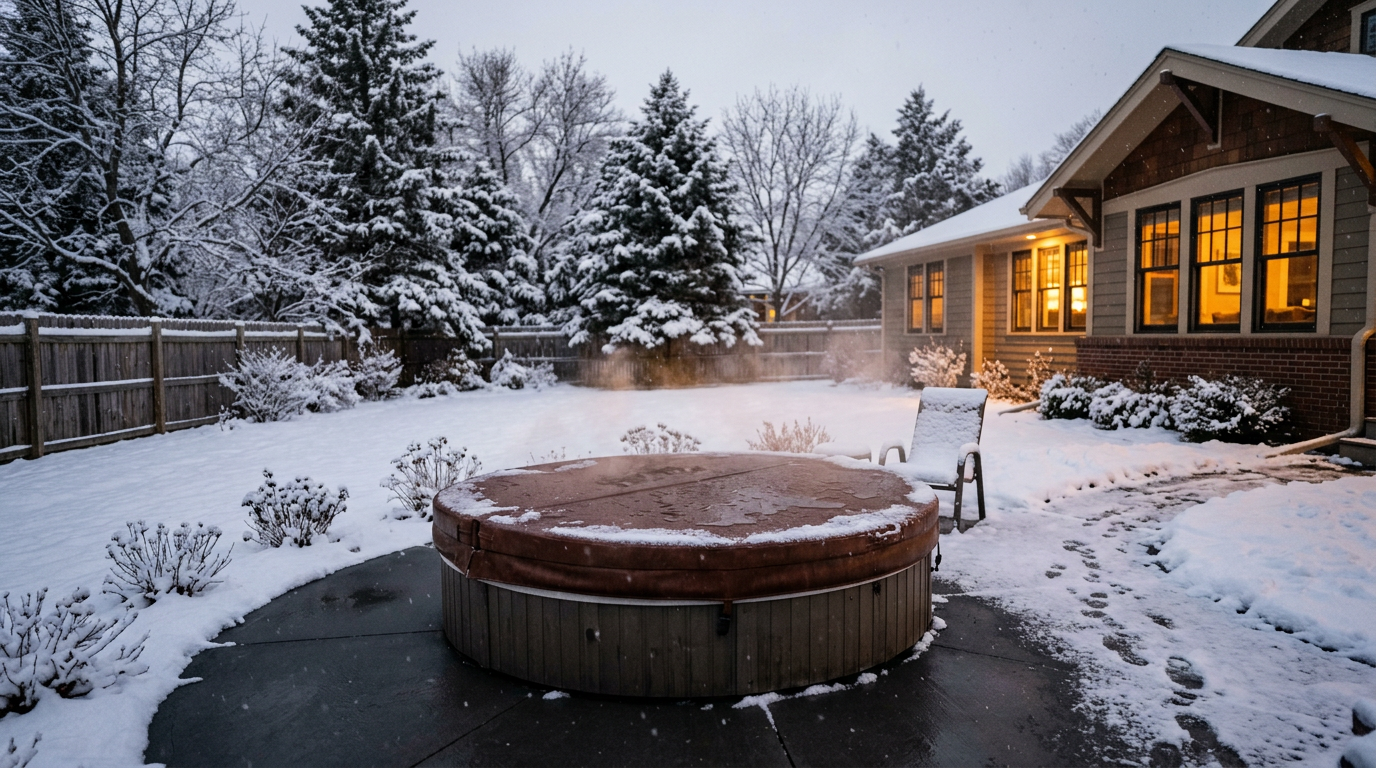
Up to 70 percent of a hot tub's total heat loss occurs directly through the top water surface via evaporation and radiation. A high-density, marine-grade vinyl cover serves as your primary defense against extreme South Dakota winters. Over time, older covers absorb moisture, turning heavy, waterlogged, and losing their original insulating capability as the foam breaks down. Replacing a worn, sagging cover with a heavy-duty model designed for extreme climates is one of the single most effective ways to lower your hot tub energy cost.
Look for covers featuring a tapered foam core, typically stepping down from 5 inches in the center to 3 inches at the edges, which encourages snow and ice runoff. The foam core should have a high density rating, sealed in a continuous vapor barrier to prevent water absorption over time. Full-length heat seal gaskets along the hinge are essential because unsealed center hinges act as chimney flues, allowing heat to escape continuously. High-quality marine vinyl with UV and cold-crack resistance ensures the exterior remains pliable and durable through severe freeze-thaw cycles.
Proper cover fit is equally critical to prevent cold air infiltration around the perimeter edge of the acrylic shell. The skirt extending from the cover edges should sit flush against the spa lip, creating a tight seal against whipping winter winds. Heavy wind straps anchored securely to the cabinet prevent strong gusts from lifting the cover edge and breaking the thermal seal. Inspecting your cover for sagging, water weight, or damaged stitching before November ensures your hot tub winter South Dakota setup remains energy-tight.
Taking proactive steps to clear accumulated heavy snow from the cover top after major blizzards prevents structural strain on the foam core. Use a soft broom rather than a sharp shovel to avoid tearing the vinyl cover material during snow removal. If your cover feels noticeably heavy when lifting, moisture has likely penetrated the inner foam cores, drastically reducing its insulation value. Upgrading to a fresh, factory-fitted cover restores peak thermal performance and protects your heating system from unnecessary labor.
Maximizing Heat Retention with Thermal Blankets and Seals
Adding a thermal blanket directly on top of the water underneath your main cover adds a powerful second layer of insulation. These floating blankets, crafted from high-density closed-cell foam or heavy-duty bubble vinyl, float flat against the water surface. By eliminating the air space between the water and the underside of the main cover, thermal blankets drastically reduce moisture evaporation. Less evaporation means less heat loss, lower humidity build-up under the vinyl cover, and protected cover foam cores.
In sub-zero weather across Rapid City and Sioux City, a thermal blanket acts as an instant barrier against cold air pockets inside the cover dome. The reduction in moisture vapor also slows down chemical breakdown in the water, helping retain balanced water chemistry longer between maintenance checks. Thermal blankets are inexpensive, easy to trim to fit any acrylic shell contour, and simple to roll back before your daily soak. They provide an immediate boost to your insulation scheme with minimal effort.
In addition to floating blankets, checking the peripheral seals around your hot tub cabinet prevents cold air drafts from cooling interior pipes. Rubber gaskets surrounding exterior access doors and filter housings can dry out or crack under harsh weather conditions. Replacing aged rubber seals and adding weather stripping around access doors keeps cold prairie wind out of the equipment bay. Combining a floating thermal blanket with tight cabinet seals yields a measurable reduction in daily power consumption.
- Floating foam or bubble blankets seal the water surface to eliminate moisture evaporation.
- Reducing undersurface condensation preserves the insulation value and lifespan of your main cover.
- Snug cabinet gaskets prevent freezing outdoor air from chilling internal equipment and plumbing lines.
Smart Temperature Management and Programmed Scheduling
Finding the ideal temperature setting during winter requires balancing personal comfort with daily operational costs. Many owners wonder whether dropping the set temperature during the workweek saves money on their spa running cost. Modern electronic control packs found on Jacuzzi, Sundance Spas, and Vita Spas models are engineered to maintain a constant temperature efficiently. Setting your spa to a consistent 100 to 102 degrees Fahrenheit is typically more economical than dropping it to 90 degrees and forcing a rapid recovery heating cycle.
Modern hot tub controllers often feature programmable economy or rest modes that allow you to optimize heater run times around your daily habits. During economy modes, the heater only engages during pre-set filtration cycles rather than constantly monitoring and adjusting water temperature. If your local electric utility offers time-of-use rate structures, programming major heating and filtration cycles during off-peak hours cuts electricity costs further. Check with your energy provider in Sioux Falls or Sioux City to determine if off-peak rate incentives apply to your home.
However, caution is necessary when utilizing economy settings in severe freezing weather to avoid freeze damage risks. Never allow the water temperature to drop too low during extended sub-zero cold snaps, as circulation pumps must run regularly to prevent pipe freezing. Utilizing smart WiFi control modules allows you to monitor spa temperature remotely from your phone while away on winter travel. Remote monitoring alerts you instantly if a power outage occurs, giving you time to respond before freeze hazards develop.
Evaluating Heat Pumps versus Standard Electric Heaters
Heat pump technology has revolutionized energy efficiency in hot tubs and swim spas, offering dramatic reductions in operating expenses. Traditional electric immersion heaters convert electrical energy directly into heat at a one-to-one efficiency ratio. In contrast, specialized cold-weather air-source heat pumps extract ambient heat from outdoor air and transfer it directly into the spa water. High-efficiency heat pumps can yield energy savings of up to 60 to 70 percent compared to standard heating elements under normal operating conditions.
While early heat pump models struggled in freezing temperatures, modern units engineered for cold climates operate effectively even in low ambient conditions. Many modern swim spas and high-capacity hot tubs feature hybrid systems that combine a heat pump with a standard electric backup heater. When temperatures drop below a specific threshold, the smart system seamlessly blends heat pump operation with the electric heater to maintain targeted water warmth. This hybrid approach ensures reliable heating performance during deep South Dakota winter freezes while maximizing energy savings during milder shoulder months.
Evaluating the return on investment for a spa heat pump depends on your climate, spa size, and usage frequency. For large capacity hot tubs or swim spas operating year-round in the Upper Midwest, the monthly energy savings accumulate rapidly. Over a few winter seasons, energy cost reductions often offset the initial equipment investment. Consulting with the expert team at Splash City helps determine if adding a heat pump system fits your specific hot tub model and winter heating goals.
Realistic Monthly Winter Cost Math for South Dakota Owners
Estimating exact hot tub energy cost numbers requires understanding local electric rates, ambient air temperatures, and individual tub efficiency. Across South Dakota and Iowa, residential electricity rates typically range between 10 and 14 cents per kilowatt-hour. During summer months, a well-insulated hot tub might draw between 100 and 150 kilowatt-hours per month, resulting in a modest monthly cost of 15 to 20 dollars. However, during peak winter months from December through February, kilowatt-hour usage increases as the heater runs more frequently to counter sub-zero ambient temperatures.
In a typical South Dakota winter with average outdoor temperatures around 15 to 20 degrees Fahrenheit, a modern, well-insulated 350-gallon hot tub consumes approximately 350 to 500 kilowatt-hours per month. At an average rate of 12 cents per kilowatt-hour, this equates to roughly 42 to 60 dollars per month in heating and filtration power. Older models with thin insulation or waterlogged covers can easily draw 800 or more kilowatt-hours, driving monthly costs above 100 dollars during severe freeze cycles.
By implementing energy-saving upgrades such as fresh covers, thermal blankets, and wind barriers, homeowners can reliably keep winter operating costs toward the lower end of the spectrum. The data points below illustrate realistic estimated winter operating costs for modern energy-efficient tubs compared to older or poorly insulated units in our region. Monitoring your electric bill and tracking monthly kWh consumption helps you spot efficiency loss early and make necessary adjustments before costs rise.
- Modern Insulated Spa (350 gal): 350 to 500 kWh/month (approx. $42 to $60/month at $0.12/kWh)
- Older or Uninsulated Spa (350 gal): 750 to 950 kWh/month (approx. $90 to $114/month at $0.12/kWh)
- Swim Spa with Hybrid Heat Pump: 400 to 650 kWh/month (approx. $48 to $78/month at $0.12/kWh)
Essential Filter Maintenance and Air Valve Controls
Routine water care and equipment maintenance play a surprising role in keeping electrical consumption low throughout the winter season. Clogged or dirty filter cartridges restrict water flow through the plumbing system, forcing circulation pumps to work harder and draw higher electrical amperage. When filter pleats become coated with oils and debris, flow sensors may trigger heater errors or cause the heater to cycle inefficiently. Cleaning your filter cartridges regularly ensures smooth water flow and optimal heating transfer across the heater element.
Another crucial yet frequently overlooked detail is the management of air control valves located along the top shell of your spa. Air valves draw outside air into the water jets using venturi action to create powerful, massaging bubble streams. However, during winter months, pulling zero-degree air into 102-degree water rapidly cools the water column from the inside out. Leaving air controls open when the hot tub is not in use causes the heater to turn on far more often to replace lost heat.
Make it a strict habit to turn off all air control valves completely as soon as you finish your daily soak. Ensure that jet pumps are set to low-speed filtration mode rather than high-speed therapy mode when exiting the spa. Additionally, maintaining balanced water chemistry prevents scale buildup on the heating element, which can insulate the element and reduce thermal transfer efficiency. Simple maintenance habits like these keep your system running smoothly while protecting your monthly energy budget.
Seasonal Windbreaks and Placement Strategies for Winter Efficiency
Wind chill is a major accelerator of surface heat loss across the open landscapes of South Dakota and Iowa. A 15-mile-per-hour winter wind strips heat from exposed cabinet panels and cover seams far faster than still air at the same ambient temperature. Positioning your hot tub in a sheltered location near your home structure shields the spa from prevailing northwest winter winds. Taking advantage of natural wind barriers reduces thermal shear across the cover and keeps internal cabinet temperatures more stable.
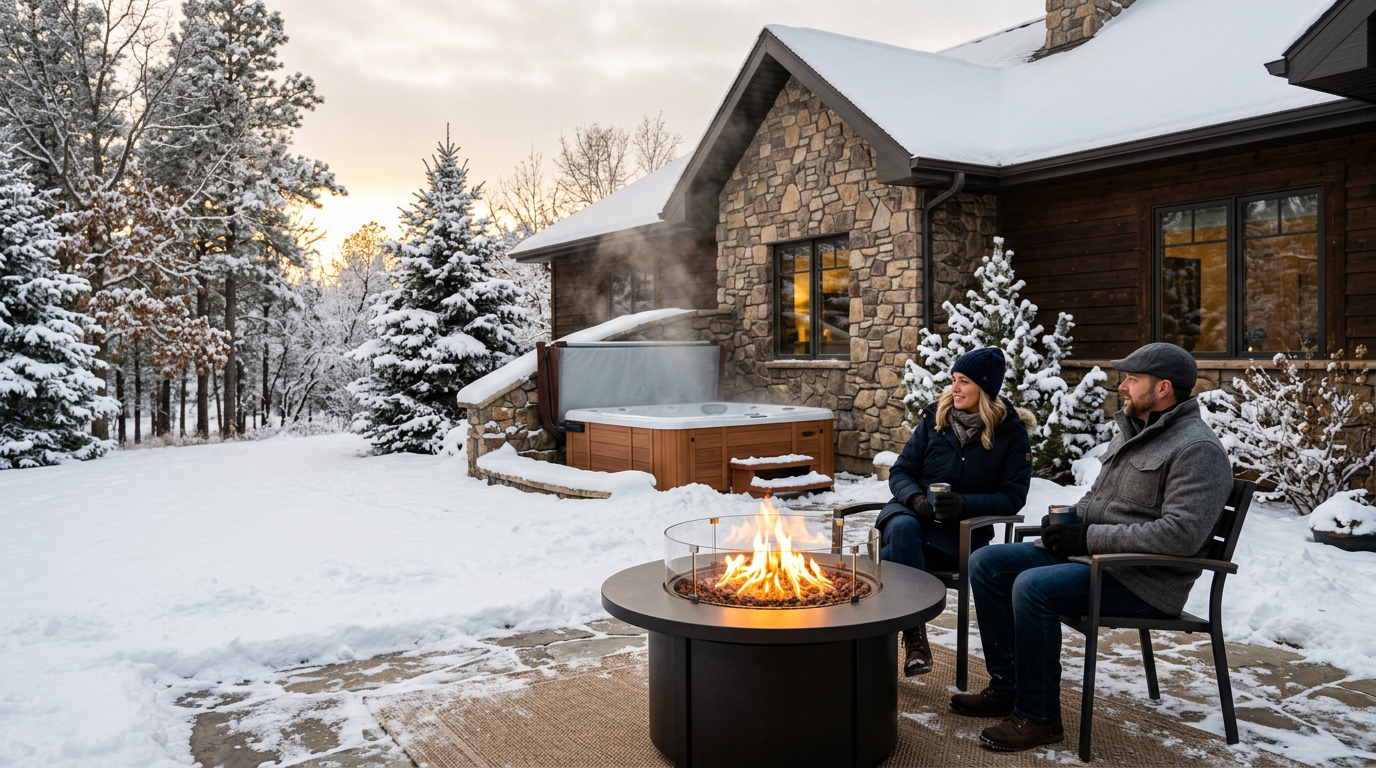
If your hot tub is already positioned in an open yard area, adding temporary or seasonal wind protection makes a noticeable difference in energy consumption. High-quality outdoor privacy screens or strategically placed winterized furniture arrangements from lines like Homecrest can break up sharp wind gusts before they hit the cabinet. Positioning fire tables or fire pits nearby from brands like Oriflamme creates a cozy winter relaxation zone while helping buffer adjacent outdoor spaces.
When planning physical placement, always maintain required structural clearances for equipment access while prioritizing proximity to your house entry door. Short walking distances encourage regular winter use while reducing the time the cover remains open during entry and exit. Minimizing the duration the cover is open during sub-zero nights locks in heat and reduces heater recovery time. Working with the outdoor living specialists at Splash City ensures your setup balances winter energy efficiency with year-round comfort.
Frequently asked questions
Talk to the Splash City team
Showrooms in Sioux Falls, Sioux City and Rapid City. Bring a water sample, a room measurement or a backyard photo — we will help you plan it.
Flexible monthly payments with quick approvals and competitive rates — apply in minutes.