How to Cut Hot Tub Running Costs in a South Dakota Winter
Discover practical strategies to lower your hot tub energy cost during Upper Midwest winters with smart insulation, covers, and efficient heating.
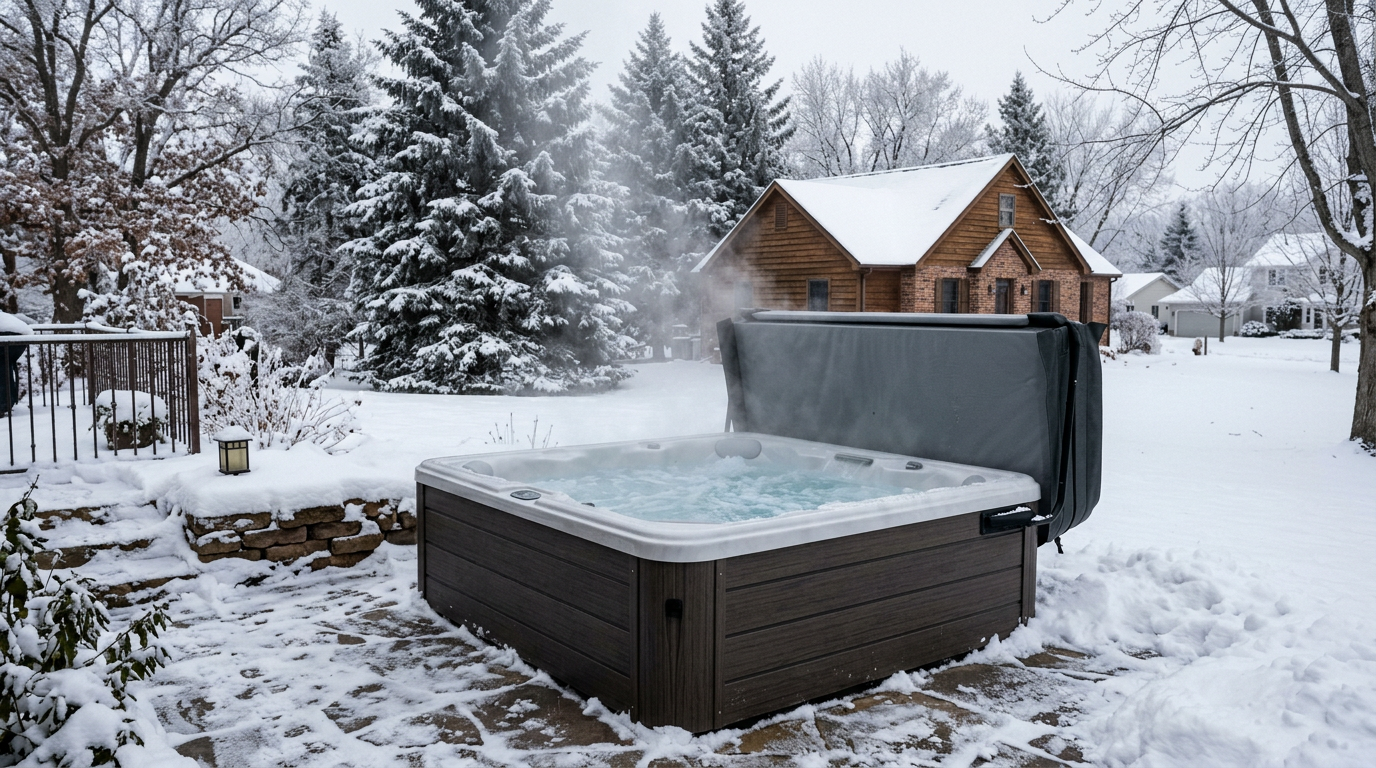
Winter in the Upper Midwest tests the endurance of any outdoor equipment, and your hot tub is no exception. As sub-zero cold fronts sweep across Sioux Falls, Sioux City, and Rapid City, keeping your spa warm, inviting, and ready for an evening soak becomes a primary focus for homeowners. Operating a spa during cold weather does not have to result in astronomical utility bills if you understand where energy is consumed and how to retain thermal energy efficiently within the cabinet.
Managing your overall hot tub energy cost requires a systematic approach that combines physical heat retention, smart control settings, and disciplined water care routines. From thermal cabinet insulation and dense foam covers to floating blankets and timed filtration cycles, small adjustments yield substantial monthly savings. By taking proactive measures before the deep freeze sets in, you can enjoy therapeutic hot water all season without facing excessive electric bills.
At Splash City, our family-owned team has spent decades helping Midwest homeowners navigate extreme winter conditions with reliable hot tubs, swim spas, and water care solutions. In this comprehensive guide, we break down the practical engineering, physics of heat loss, and daily operational habits needed to minimize your spa running cost throughout the coldest months of the year.
Understanding South Dakota Winter Energy Demands on Your Spa
To effectively reduce energy consumption during a Northern Plains winter, you must first understand the concept of thermal differential, often referred to as delta T. In mid-summer, the ambient air temperature might hover around 85 degrees Fahrenheit, meaning your hot tub heater only needs to raise the water temperature by 15 to 20 degrees to reach a comfortable 102 degrees. During a South Dakota January, however, ambient temperatures frequently drop to zero or below, creating a temperature difference of over 100 degrees between the water and the surrounding air.
This dramatic differential accelerates the rate of heat transfer through conduction, convection, and evaporation. Conduction occurs where heat escapes through the shell and cabinet walls. Convection happens as freezing winds sweep across the exterior cabinet and cover seam. Evaporative loss, which accounts for the vast majority of heat dissipation, occurs rapidly whenever steam escapes from the water surface into dry winter air.
When the ambient temperature drops significantly, your spa heater works harder and cycles more frequently to maintain set temperatures and prevent plumbing lines from freezing. Most modern spas feature automatic freeze protection routines that run circulation pumps when internal sensors detect critical cold. By minimizing thermal leakage across all three pathways, you directly reduce the total kilowatt-hours required by your electric heater to keep the spa safe and warm.
The Thermal Shield: Evaluating Your Hot Tub Insulation Quality
The primary barrier protecting your water from bitter Upper Midwest cold is internal hot tub insulation. Manufacturers utilize different insulation methods, ranging from basic perimeter wrapping to high-density full-foam applications. High-quality brands like Jacuzzi, Sundance Spas, American Whirlpool, and Vita Spas engineered their cabinets specifically to retain ambient mechanical heat generated by the pumps while locking out freezing exterior air.
Full-foam insulation coats the entire shell undersurface and fills the inner cabinet cavity with closed-cell polyurethane foam. This dense foam supports the plumbing infrastructure, eliminates air movement inside the cabinet, and locks heat directly into the water shell. Multi-layer perimeter insulation systems use reflective thermal barriers combined with high-density foam panels to bounce radiant heat back toward the interior pipes while shielding against wind intrusion.
If you own an older spa or a model with lightweight insulation, inspecting the internal cabinet is an essential pre-winter task. Inspecting access panels for gaps or damaged insulation panels allows you to restore factory performance. Ensuring your cabinet air barrier remains intact prevents Arctic winds from blowing through internal plumbing lines, preserving precious British Thermal Units and lowering your monthly energy footprint.
Upgrading Your Hot Tub Cover for Deep Sub-Zero Protection
Even with high-grade cabinet insulation, up to 70 percent of heat loss occurs through the top surface of the spa via steam and radiation. A worn, heavy, or saturated cover is the single largest contributor to a high spa running cost. Over time, chemical vapors and moisture break down the inner plastic vapor barrier surrounding the foam core, causing the core to absorb water and lose its insulating capacity.
When selecting a replacement cover for harsh winter conditions, look for high-density expanded polystyrene foam cores with a distinct taper, such as five inches in the center tapering down to three inches at the edges. This pitch encourages heavy snow load runoff while providing substantial thermal resistance. Additionally, marine-grade vinyl outer shells treated with UV and cold-crack inhibitors resist splitting during sub-zero cold snaps in Rapid City and Sioux Falls.
A critical feature for winter cover efficiency is a full-length heat seal gasket along the fold hinge. Without a robust hinge seal, heat rapidly pours out of the center gap where the two cover halves meet. Premium covers feature thick, vinyl-wrapped foam pads that interlock when closed, effectively sealing off the weakest point in the top barrier.
- Select dense 1.5-pound or 2.0-pound high-density foam cores for maximum thermal resistance.
- Ensure a heavy-duty vapor barrier with minimum 6-mil poly sealing to prevent waterlogging.
- Verify the presence of a continuous thermal baffle pad along the full length of the center fold hinge.
- Replace any cover that feels excessively heavy, waterlogged, or sagging in the center.
Maximizing Heat Retention with Floating Thermal Blankets and Spa Caps
In addition to a structural hard cover, adding a secondary floating thermal blanket directly on the water surface provides an exceptional layer of defense. Thermal floating blankets are made from heavy-duty closed-cell foam or thick bubble-film material cut to the exact dimensions of your spa interior. Floating directly on top of the water, the blanket traps steam before it reaches the underside of your hard cover.
By containing evaporation right at the water line, a floating blanket keeps the inner vinyl lining of your hard cover dry, extending its operating lifespan and preventing ice formation around the rim. This simple accessory creates a dead-air space between the blanket surface and the cover foam, significantly slowing down radiant heat dissipation during prolonged sub-zero nights.
For extreme weather exposure, an exterior spa protective cap fitted over your hard cover adds yet another layer of weatherproofing. These durable fabric caps stretch down over the cabinet skirt, shielding vinyl seams from blowing snow, freezing rain, and high winds. Eliminating cold air infiltration around the lip of the hard cover maintains stable water temperatures with far less heater intervention.
Managing Filtration Schedules and Heating Cycles for Efficiency
Modern hot tubs feature programmable electronic control tops that allow owners to customize filtration duration, timing, and heating operational modes. Running filtration pumps creates water friction and mechanical heat, but running high-speed jet pumps continuously consumes unnecessary power. Balancing clean water with low power consumption is key to optimizing your hot tub winter South Dakota strategy.
Most energy-efficient hot tubs rely on dedicated low-wattage circulation pumps that move water quietly 24 hours a day using minimal electricity. If your spa relies on two-speed main pumps for filtration, set your daily filter cycles to run for three to four hours twice per day. Running filtration during the coldest hours of the night can double as freeze prevention while utilizing lower ambient electricity rates if your local utility offers time-of-use pricing.
Avoid turning your set water temperature down drastically between uses during deep winter months. Lowering the water temperature from 102 degrees down to 80 degrees when not in use forces the heater to run continuously for 10 to 14 hours straight to recover lost temperature before your next soak. Maintaining a stable target temperature requires less cumulative energy than reheating hundreds of gallons of chilled water.
Cold-Weather Water Chemistry and Its Impact on Heating
Water balance plays a direct role in equipment efficiency and heating hardware longevity. High concentrations of total dissolved solids, unbalanced pH, or elevated calcium hardness levels lead to scale formation on heater elements. Calcium deposits act as an insulating insulator in the wrong direction, preventing heat generated by the element from transferring cleanly into the water.
When scale builds up on heating elements, the element must run at higher internal temperatures to transfer energy into the water, causing thermal stress and increased electricity draw. Keeping your total alkalinity, pH, and calcium levels within recommended parameters prevents scale from forming on critical components. Fresh, clean water absorbs and holds heat more predictably than old, chemically saturated water.
Plan your winter water maintenance carefully before freezing temperatures arrive. Performing a thorough drain, flush, and refill in late autumn ensures your spa operates on fresh water through December, January, and February, eliminating the need for a risky mid-winter drain and refill during sub-zero conditions.
- Maintain pH levels strictly between 7.2 and 7.6 to prevent chemical corrosion or scale precipitation.
- Keep calcium hardness balanced between 150 ppm and 250 ppm for optimal element heat transfer.
- Use a pipe system flush before your late-autumn drain to remove bio-film and mineral buildup.
- Test water weekly with reliable test strips or liquid reagents to maintain chemical equilibrium.
Modern Auxiliary Heating: Heat Pumps vs Traditional Electric Heaters
While traditional hot tubs utilize electric resistance immersion heaters rated between 4.0 kW and 5.5 kW, recent advancements in cold-climate air-source heat pumps offer remarkable efficiency improvements. Air-source heat pumps transfer heat energy from the surrounding outdoor air into the water using a refrigerant cycle, yielding significantly higher efficiency ratings than standard resistance heating.
The performance of a heat pump is measured by its Coefficient of Performance (COP). A standard electric heater has a COP of 1.0, meaning every kilowatt of electricity consumed yields one kilowatt of heat energy. Modern cold-climate heat pumps engineered for spa application can achieve COPs of 2.5 to 3.5 even in winter temperatures down to 15 degrees Fahrenheit, yielding up to a 60 percent reduction in heating power consumption.
During extreme Upper Midwest freeze conditions below zero, hybrid control systems automatically supplement heat pump output with the standard electric heating element. Integrating cold-climate auxiliary heating into compatible spa models drastically reduces seasonal energy requirements while ensuring rapid temp recovery even during winter storms in Sioux Falls or Rapid City.
Realistic Monthly Cost Calculations for Sioux Falls, Sioux City, and Rapid City
Calculating your actual hot tub energy cost requires reviewing local electricity rates, measured in cents per kilowatt-hour (kWh), and matching them against expected monthly energy consumption. In South Dakota and Iowa, residential electricity rates typically range from $0.11 to $0.14 per kWh, making electric heating far more affordable than in regions with higher energy rates.
During summer months, a fully insulated modern hot tub might consume between 100 kWh and 150 kWh per month, resulting in an added utility cost of approximately $12 to $20. In contrast, during peak winter months across Sioux Falls, Sioux City, and Rapid City, cold ambient air increases energy consumption to roughly 350 kWh to 500 kWh per month for high-efficiency, fully foamed models with dense covers.
To calculate your practical winter running cost, multiply your regional utility rate by estimated kWh usage. For example, a well-insulated Jacuzzi or Sundance Spas model consuming 400 kWh in January at an average rate of $0.12 per kWh will cost approximately $48.00 per month to operate. Older models or spas with saturated covers can easily exceed 750 kWh monthly, pushing winter running costs past $90.00.
- Base Summer Cost: ~100 to 150 kWh ($12 to $20 per month).
- Efficient Winter Cost: ~350 to 500 kWh ($42 to $65 per month).
- Legacy or Uninsulated Winter Cost: ~700 to 900+ kWh ($85 to $120+ per month).
- Average local electricity baseline: $0.11 to $0.14 per kWh across South Dakota and Iowa.
Essential Winter Maintenance Routines to Prevent Drafts and Heat Loss
Daily habits and routine preventative maintenance play a decisive role in protecting your spa from winter drafts. One common oversight is leaving top air control valves open when the hot tub is not in use. Air control valves draw cold ambient air into the water plumbing lines to create massage bubbles; leaving them open continuous draws sub-zero air into the hot water, rapidly chilling the tub.
Make it a strict rule to close all air control dials after every soaking session. Additionally, inspect the rubber perimeter seal along your equipment bay access door. If door latches are loose or gaskets are cracked, freezing air can blow directly into the pump compartment, chilling internal plumbing lines and triggering auxiliary freeze protection cycles unnecessarily.
Keeping snow accumulation off your top cover is another necessary task. While a thin layer of light powder acts as a natural insulator, heavy wet snow or ice accumulation compresses internal cover foam, damages seams, and increases conductive heat loss. Gently brush snow off your cover with a soft broom after winter storms to preserve structural integrity and maintain maximum thermal protection.
Frequently asked questions
Talk to the Splash City team
Showrooms in Sioux Falls, Sioux City and Rapid City. Bring a water sample, a room measurement or a backyard photo — we will help you plan it.
Flexible monthly payments with quick approvals and competitive rates — apply in minutes.