How to Cut Hot Tub Running Costs in a South Dakota Winter
Discover practical strategies to lower your hot tub energy costs during South Dakota winters with insulation tips, cover care, and smart scheduling.
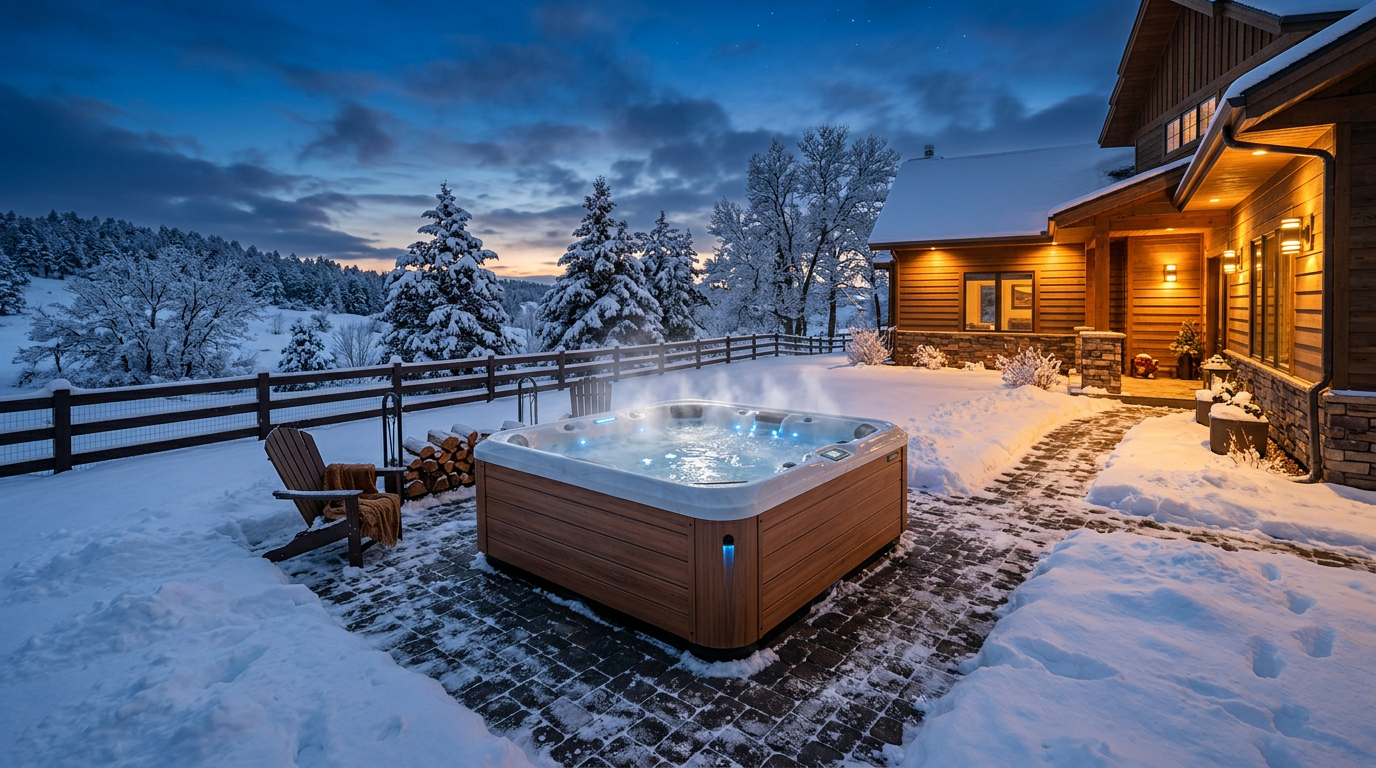
Winter across the Upper Midwest brings relentless freezing winds, heavy snowfall, and extended deep freezes to Sioux Falls, Rapid City, and Sioux City. Outdoor hot tubs become prized backyard sanctuaries when ambient temperatures drop below zero. However, maintaining a warm, welcoming spa during severe weather demands a clear understanding of heat retention mechanics. High electrical bills do not have to be an inevitable trade-off for enjoying year-round outdoor soaking.
Lowering your hot tub energy cost requires a systematic approach to heat loss prevention. Thermal energy naturally moves toward cold surrounding air through surface evaporation, perimeter conduction, and convective wind chill. By identifying exactly where heat escapes from your tub, you can implement targeted upgrades that maintain ideal water temperatures while dramatically cutting monthly kilowatt-hour consumption.
Splash City has helped homeowners across South Dakota and Iowa navigate harsh winter conditions for decades. Whether you operate a modern full-foam spa or an older cabinet model, straightforward practical adjustments can save substantial money every month. This comprehensive guide breaks down real winter running costs, cabinet insulation methods, cover protection, accessory upgrades, and smart operational schedules tailored specifically to our regional climate.
Understanding Winter Spa Energy Loss in the Upper Midwest
The physics of spa heating in sub-zero weather center on three main forces: surface evaporation, cabinet conduction, and convective air stripping caused by prairie winds. In places like Sioux Falls and Rapid City, dry winter air accelerates surface evaporation whenever the spa cover is open or loosely sealed. Water vapor carries away huge amounts of thermal energy, forcing your heater to run frequently just to restore set temperatures.
Convective loss occurs when winter wind sweeps across the spa cabinet exterior and exposed shell rim. Even when air temperatures sit at a manageable twenty degrees Fahrenheit, high wind chill values strip heat rapidly from outer paneling. Unprotected cabinets situated on open, elevated decks suffer far greater thermal degradation than tubs shielded by patio walls, fencing, or nearby structures.
Conduction happens directly through the floor pan and lower side walls of your hot tub cabinet. Frozen concrete patio pads pull heat downward continuously throughout December, January, and February. Inspecting the contact zone between the spa pedestal and cold ground reveals how uninsulated floor structures act as thermal bridges, transferring warmth away from internal plumbing.
Understanding these primary pathways allows you to implement defensive layers where heat loss is highest. Over sixty percent of total heat escape happens through the top surface, while the remaining forty percent drains through perimeter panels, cabinet air gaps, and uninsulated base structures. Targeted upgrades to these specific zones yield immediate drops in daily power consumption.
The Math Behind South Dakota Winter Hot Tub Running Costs
Calculating your true spa running cost during a Northern Plains winter involves evaluating local kilowatt-hour electrical rates alongside average seasonal weather shifts. In South Dakota and Iowa, residential electricity typically costs between ten and fourteen cents per kilowatt-hour. During mild autumn months, running an efficient four-person hot tub might consume three hundred kilowatt-hours per month, translating to roughly thirty to forty dollars on your utility bill.
When January storms bring sustained sub-zero temperatures and wind chills dipping down to minus fifteen degrees, energy consumption changes dramatically. A four-kilowatt heater operating in an unoptimized or uninsulated tub may run eight to twelve hours daily just to maintain a steady one hundred and two degrees Fahrenheit. At twelve hours of daily operation, that single heater consumes forty-eight kilowatt-hours per day, adding over one hundred and fifty dollars per month in heating costs alone.
By contrast, a high-efficiency spa featuring dense full-foam insulation and a fitted thermal blanket operates at a fraction of that electrical draw. In identical sub-zero conditions, an optimized system might only require three to four hours total heater runtime per day. This reduces daily power draw to roughly sixteen kilowatt-hours, holding monthly winter heating increases down to approximately sixty dollars.
The difference between an optimized spa setup and an uninsulated model can equal over one hundred dollars per month across cold weather months. Over a five-year period, smart energy management saves homeowners in Sioux City and Rapid City thousands of dollars in power bills while protecting internal components from unnecessary wear.
- Average mild weather electrical cost: fifteen to twenty-five dollars monthly.
- Unoptimized sub-zero winter electrical cost: one hundred twenty to one hundred eighty dollars monthly.
- Energy-optimized winter electrical cost: fifty to eighty dollars monthly.
- Five-year potential savings: eighteen hundred to three thousand dollars.
Standard Cabinet Insulation vs Full Foam: What Really Holds Heat
Hot tub cabinet insulation design plays a vital role in how efficiently your system retains heat when outside air drops below freezing. Manufacturers utilize different methods to insulate cabinet cavities, ranging from lightweight perimeter foil wraps to dense closed-cell polyurethane full foam. Evaluating your tub's internal construction helps you determine whether secondary insulation upgrades are necessary before severe weather arrives.
Perimeter or partial insulation leaves open air space inside the cabinet surrounding plumbing lines and the acrylic shell back. While this design allows straightforward access for maintenance, large air gaps encourage heat to transfer away from the water and vent out cabinet seams. In high-wind regions like Rapid City, cold air penetrates loose equipment doors, cooling internal pipes and forcing heaters to cycle frequently.
Full-foam insulation completely fills every cubic inch of internal space between the shell and outer cabinet with rigid foam. This structural foam locks plumbing securely in place, dampens pump vibration stress, and eliminates convection currents inside the cabinet bay. The foam acts as a massive thermal ballast, storing heat and keeping internal water warm for days even during extended power outages.
If your spa utilizes hollow cabinet construction, you can safely add thermal barriers inside the panel walls. Installing removable rockwool batts or foil-faced rigid foam insulation panels inside access doors creates vital dead-air zones without blocking essential motor ventilation or service access points.
Maximizing Cover Efficiency and Preventing Thermal Leaks
Your hot tub cover is the single most critical defense against elevated winter energy bills. Because hot air and steam naturally rise, an aging, waterlogged, or ill-fitting cover allows massive heat loss continuously into cold air. Inspecting the structural integrity, core density, and edge seals of your cover before November ensures maximum heat retention all season long.
Over time, protective vapor barrier films inside vinyl covers can degrade, allowing moisture to saturate internal foam cores. A waterlogged cover loses nearly all its thermal insulation value and becomes extremely heavy to lift. When foam cores absorb moisture, heat transfers directly through the saturated core into the sky, functioning more like a cooling radiator than an insulating seal.
Cover taper dimensions and perimeter skirt seals are equally crucial for preventing edge leakage along the acrylic rim. High-efficiency winter covers feature a thick five-inch to three-inch continuous taper, allowing rain and melting snow to run off smoothly while maintaining strength against heavy snow loads. Continuous center hinge seals block steam from escaping through the middle fold where cover halves join.
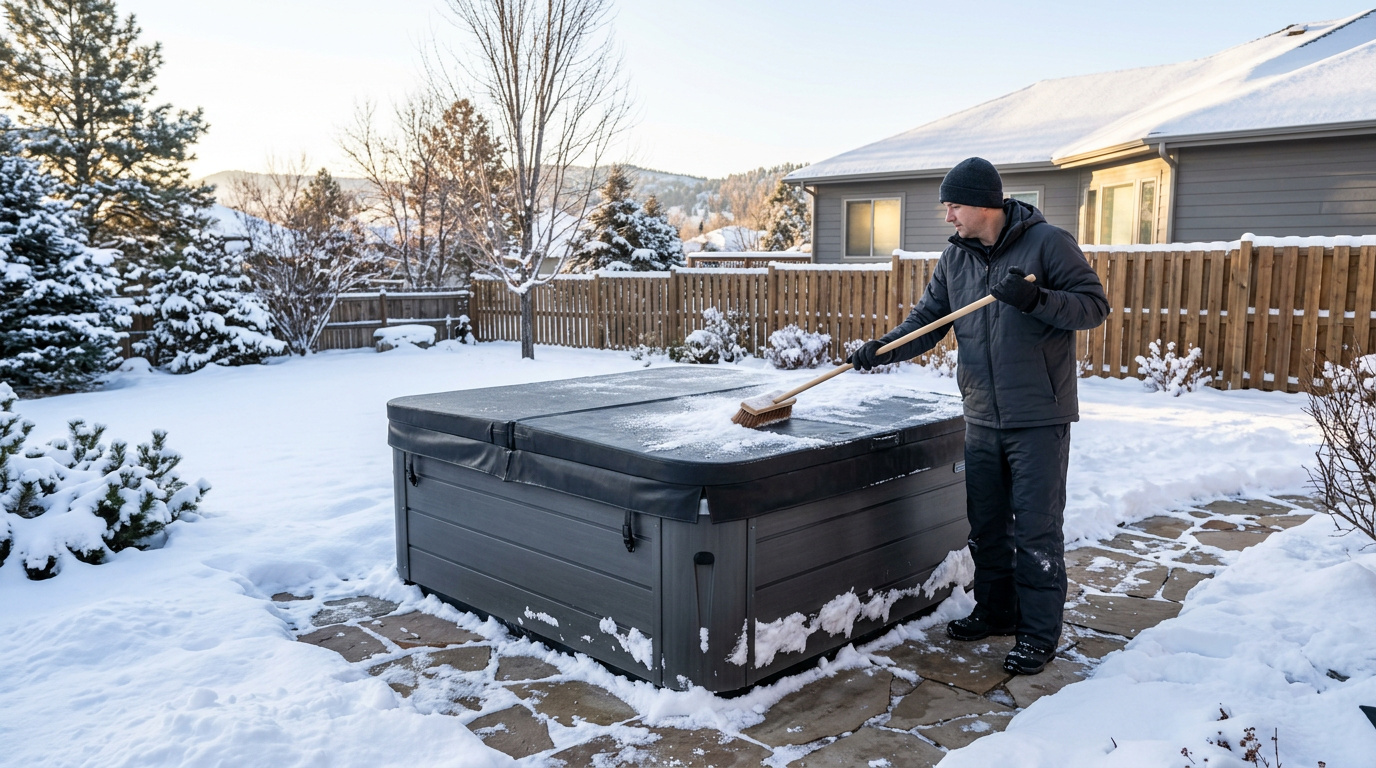
Simple maintenance habits prolong cover life and keep seals tight against extreme winter winds. Regularly clearing heavy snow accumulations with a soft broom prevents foam core sag and structural seam tearing. Treating outer marine-grade vinyl with weather protectants prevents cracking, ensuring continuous airtight contact around the entire perimeter of your spa shell.
- Replace vinyl covers every three to five years or when weight exceeds sixty pounds.
- Choose taper profiles of five-to-three inches or six-to-four inches for Upper Midwest snow loads.
- Ensure continuous steam stopper pads are installed along the full length of the center fold.
- Inspect perimeter skirts to verify they lie flat against the acrylic edge without curling upward.
Thermal Blankets and Windbreaks: Low-Cost Heat Retention Upgrades
Adding supplementary heat retention accessories offers one of the fastest return on investment opportunities for spa owners. Floating thermal blankets sit directly on top of the water surface underneath your main cover. Made from heavy-duty bubble polyethylene or closed-cell foam, these floating sheets create an insulated dead-air layer that dramatically restricts surface evaporation.
By stopping steam from rising directly off the water, floating thermal blankets protect the underside of your hard cover from constant moisture saturation. This dual-action benefit lowers immediate surface heat loss while extending the operational lifespan of your primary vinyl cover. Standard floating solar blankets with an eight-mil or twelve-mil thickness cost very little but cut surface thermal transfer significantly.
Microclimates surrounding your hot tub pad also exert strong influence over daily heating demands. Wind velocity across exposed cabinet surfaces increases convective heat loss exponentially during South Dakota prairie winter storms. Installing physical windbreaks around your spa deck breaks up turbulent air currents, creating a calm perimeter pocket that insulates cabinet side panels.
Strategic placement of solid wooden privacy screens, stone planter walls, or heavy-duty outdoor curtains reduces local wind speed dramatically. Placing your spa within six to eight feet of an exterior house wall or garage structure provides natural wind protection while making late-night winter soak trips warmer and more comfortable.
Heat Pump Systems vs Traditional Electric Heaters in Sub-Zero Weather
Modern hot tub heating technology has advanced significantly with the integration of specialized cold-climate air-source heat pumps. Traditional spa heating relies on electric immersion elements that convert electrical energy directly into thermal energy at a one-to-one ratio. A four-kilowatt traditional heater consumes four kilowatts of electricity to produce four kilowatts of heat output, maintaining a Coefficient of Performance of exactly one.
Air-source heat pumps function by extracting latent heat energy from outside ambient air and transferring it directly into your spa water through high-efficiency heat exchangers. In moderate temperatures above forty degrees Fahrenheit, modern spa heat pumps achieve Coefficients of Performance between three and five. This means the system produces three to five times more thermal energy than the electrical power it consumes, reducing heating costs by up to seventy percent.
However, Upper Midwest winter conditions present unique challenges for heat pump systems when temperatures drop below freezing. Modern cold-climate hot tub heat pumps feature advanced inverter compressors and automated defrost cycles capable of operating efficiently down to zero or sub-zero Fahrenheit levels. Even when performance drops during severe cold spells, hybrid systems automatically blend electric element heat with heat pump output to maintain target water temperatures reliably.
Upgrading to a cold-climate heat pump requires upfront capital investment, but long-term energy reductions make it an attractive option for high-use spa owners in Sioux Falls and Sioux City. Evaluating total year-round operating cycles reveals substantial net savings, as heat pumps cut power consumption significantly during spring, autumn, and mild winter weather stretches.
Smart Scheduling, Temperature Management, and Filtration Settings
Digital spa control platforms allow owners to optimize energy consumption through customized filtration timing and temperature setback strategies. A common misconception among new owners is that lowering water temperature drastically between uses saves significant money. In reality, letting a hot tub drop fifteen degrees and then forcing the heater to recover that lost temperature in sub-zero air consumes more total energy than maintaining a steady setpoint.
Keeping your spa set at a consistent temperature, such as one hundred or one hundred and two degrees Fahrenheit, utilizes low-level incremental heating cycles that demand less peak electrical current. If you plan to travel for extended periods during winter, dropping temperature setpoints slightly to ninety-five degrees keeps internal water safely warm while reducing standby electrical consumption without risking freeze damage to internal manifold plumbing.
Filtration cycles also directly impact monthly electric bills because circulation pumps generate continuous energy draw. Setting high-speed filtration cycles during peak daylight hours when ambient air temperatures are highest takes advantage of slightly warmer surrounding air. Most modern control systems permit programming two distinct daily filtration windows, ensuring optimal water clarity without running high-draw pumps during freezing overnight cold snaps.
Utilizing economy mode features found on modern control panels manages heating behavior by restricting heater activation strictly to designated filtration cycles. This prevents the heater from turning on repeatedly every time ambient wind gusts temporarily drop sensor housing temperatures. Fine-tuning these internal electronic settings delivers immediate monthly power reductions without sacrificing warm water readiness.
Preventive Maintenance and Gasket Inspections Before the Big Freeze
Comprehensive preventive maintenance performed prior to winter freeze cycles prevents costly emergency repairs and unexpected energy spikes. Dirty or clogged filter cartridges restrict water flow through the heater tube, triggering safety pressure switches that force heaters to cycle erratically or shut down entirely. Cleaning or replacing filter cartridges every three to four months ensures maximum water velocity across heating elements.
Inspect perimeter cabinet panels and access doors for air gaps to prevent freezing drafts from chilling internal plumbing. Cold air leaks surrounding circulation pumps and heater manifolds force equipment to work harder to maintain internal cabinet temperatures. Replacing worn weather stripping along panel edges seals equipment bays tightly against drifting snow and frigid winds.
Checking motor shaft seals, union gaskets, and slice valves inside the pump housing prevents minor leaks from turning into ice blockages. Even a slow, steady drip off a pump union lowers water levels over time, exposing upper plumbing lines and freeze protection sensors to freezing conditions. Tightening union nuts and lubricating rubber seals with silicone lubricant protects vital internal components.
Verifying proper operation of auto-freeze protection circuits ensures peace of mind during extreme Upper Midwest weather events. Modern spa controllers feature built-in temperature sensors that automatically engage circulation pumps and low-speed heating if cabinet temperatures drop near freezing thresholds. Testing these automated safety protocols in early autumn ensures your investment stays fully protected regardless of external weather shifts.
Practical Action Plan for Lowering Your Winter Energy Bill
Taking action to optimize hot tub energy performance does not require completely overhauling your outdoor setup overnight. Implementing a structured step-by-step maintenance strategy allows you to build thermal protection layers efficiently while keeping initial costs low. Start by completing simple high-impact adjustments before investing in secondary insulation or capital equipment upgrades.
First, carefully audit your cover condition, perimeter rubber gaskets, and floating blanket setup before cold weather arrives. Clean internal filter cartridges thoroughly to ensure unrestricted water flow across heating elements. Verify that your control panel is programmed to run primary filtration cycles during warmer daytime hours and confirm setpoint stability.
Second, focus on wind protection and localized insulation around cabinet entry panels. Position decorative privacy screens or lattice windbreaks upwind of your spa pad to mitigate severe convective cooling. If your cabinet features open air cavities, install removable insulation panels inside access doors to deaden internal air currents around pumps and piping.
Finally, visit your local Splash City showroom in Sioux Falls, Rapid City, or Sioux City to consult with experienced winter spa specialists. Our regional teams carry heavy-duty cold-climate replacement covers, tailored thermal blankets, high-efficiency replacement filters, and advanced heat pump upgrade options engineered specifically to withstand rigorous Upper Midwest winters.
- Inspect and replace worn or saturated spa covers immediately.
- Install an eight-mil or twelve-mil floating thermal blanket on top of the water surface.
- Program filtration cycles for daytime hours to utilize warmer outdoor air.
- Seal cabinet panel seams with heavy-duty weather stripping.
- Consult Splash City experts for tailored local winterization advice and high-efficiency accessories.
Frequently asked questions
Talk to the Splash City team
Showrooms in Sioux Falls, Sioux City and Rapid City. Bring a water sample, a room measurement or a backyard photo — we will help you plan it.
Flexible monthly payments with quick approvals and competitive rates — apply in minutes.