Above-Ground vs. Inground Pools: Choosing the Right Pool for a Midwest Backyard
Short swim seasons, frost lines, clay soil and real budgets change the pool math in South Dakota and Iowa. A practical comparison of above-ground, semi-inground and fiberglass inground pools — cost, install timeline, lifespan and winter reality.
A backyard pool in the Upper Midwest is a different proposition than a pool in Phoenix. Our swim season runs roughly Memorial Day to mid-September without heat, maybe late April to early October with it. Frost lines are deep, soil ranges from heavy clay to sand depending on which side of town you are on, and every pool has to be closed and reopened annually. Those facts should shape the buying decision, and too often they do not enter the conversation until after a contract is signed.
The good news is that the range of quality options has never been better. Modern above-ground pools from manufacturers like Doughboy bear no resemblance to the flimsy big-box pools people remember from childhood; a resin-and-steel Doughboy with a deck around it is a twenty-year backyard fixture. Semi-inground installations bridge the gap. And fiberglass inground pools from manufacturers like San Juan have compressed install timelines from months to weeks.
This guide compares the three honestly — what each actually costs installed, how long each takes, how they behave in our climate, what they demand in maintenance, what they do to property value and insurance, and which one fits which kind of household. Splash City has been putting pools in Dakota and Iowa backyards for decades, and the recommendations here reflect what we see holding up in year twelve, not just what looks good in year one.
Start with the swim season, not the pool
The single most important planning number in our market is how many days a year you will actually swim. Unheated, most backyard pools in eastern South Dakota are comfortable from roughly the first week of June through the end of August — call it 90 days. Add a heater and a solar or automatic cover and you can realistically extend that to 150 days, from early May into early October.
That number drives everything downstream. If your household will swim 90 days a year and mostly on weekends, spending inground money is a lifestyle decision rather than a value decision, and a well-built above-ground pool with a good deck delivers close to the same number of enjoyable afternoons. If you are going to add heat and swim five months, the calculus shifts and the additional structure and depth of an inground pool start earning their keep.
Heating is the lever most Midwest buyers underestimate. A gas heater can bring a pool to comfortable temperature in a day and holds it regardless of weather; a heat pump is far cheaper to run but works slowly and loses effectiveness as nights cool; a solar cover is the cheapest and most effective single accessory anyone can buy, often adding 6-10 degrees and cutting evaporative loss dramatically. Budget for heating and covering at purchase, not as an afterthought two seasons later.
Also count who is swimming. Families with kids under twelve use a pool constantly for six or seven years and then use it much less. That is a real pattern, and it is a strong argument for a pool that costs less up front and can be removed or replaced when the household changes.
Above-ground pools: what they are now
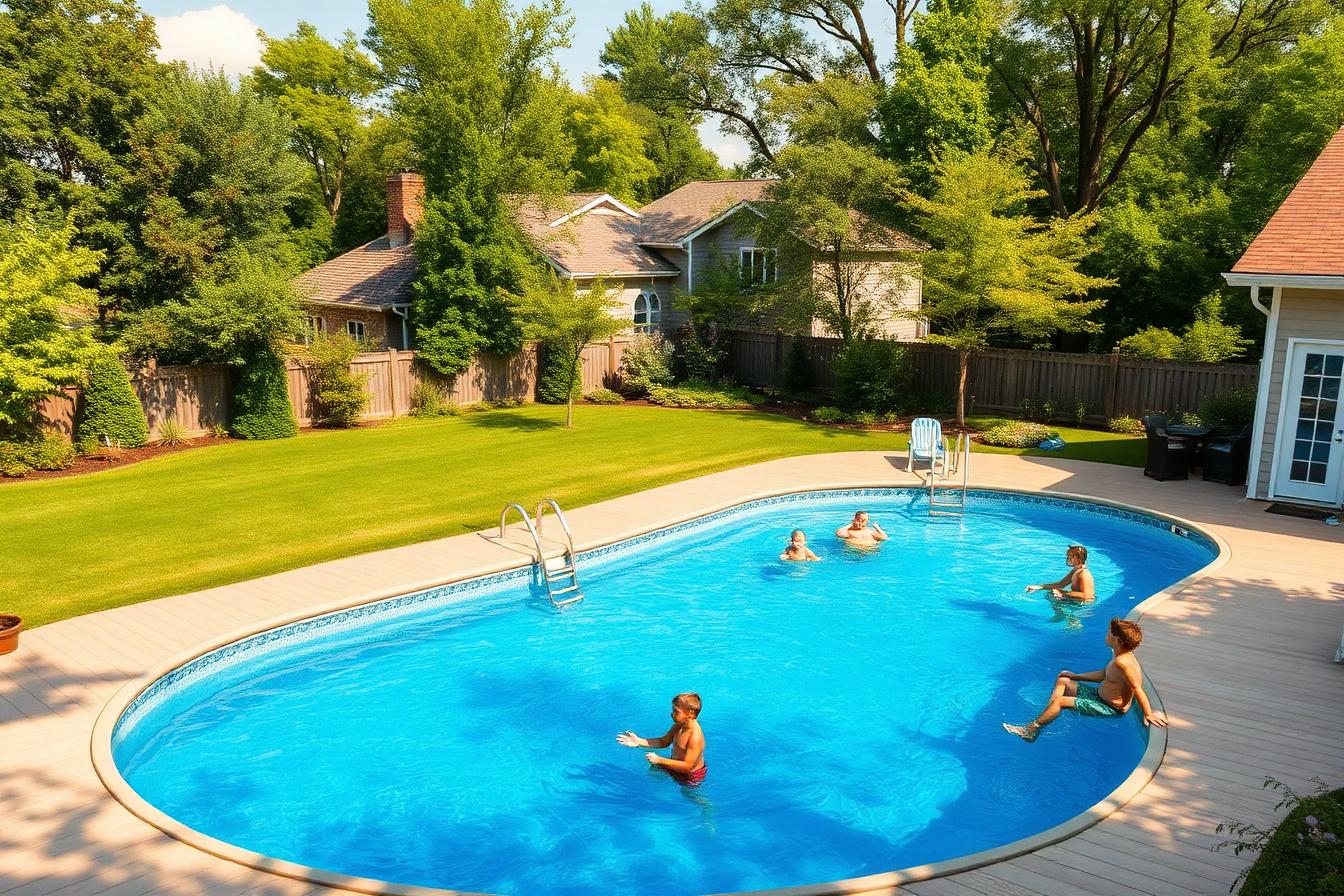
A quality above-ground pool today is a resin or hybrid resin-and-steel structure with a heavy-gauge wall, aluminum or resin uprights that will not rust, a UV-stabilized liner, and hardware engineered for decades of freeze-thaw cycling. Doughboy, which has been building pools in the United States since the 1940s, is the reference point in this category, and their premium models carry warranties that outlast a lot of inground vinyl liners.
Installed cost typically lands in the low-to-mid five figures once you include site prep, the pool package, filtration, and basic decking — dramatically less than an inground pool of comparable water surface. Installation is measured in days, not months. Site prep matters enormously: the ground must be excavated flat and level, not built up, and a properly prepared base is the difference between a pool that lasts twenty years and one that develops a leaning wall in five.
The other quiet advantage is reversibility. An above-ground pool can be removed, resold or replaced when the household changes. Homeowners who move every seven or eight years, families whose kids will be in college in a decade, and anyone unsure about a permanent commitment all benefit from that optionality.
The tradeoffs are real too. Depth is limited, so no diving. The look is different, though a full surrounding deck with proper railings and lighting closes most of that gap. And a pool sitting above grade is more exposed to wind, which increases evaporation and cooling.
- Fastest installation — often complete within a week of site prep.
- Lowest total installed cost by a wide margin.
- Removable and replaceable as household needs change.
- Limited depth; a full deck substantially improves both looks and usability.
Semi-inground: the underrated middle
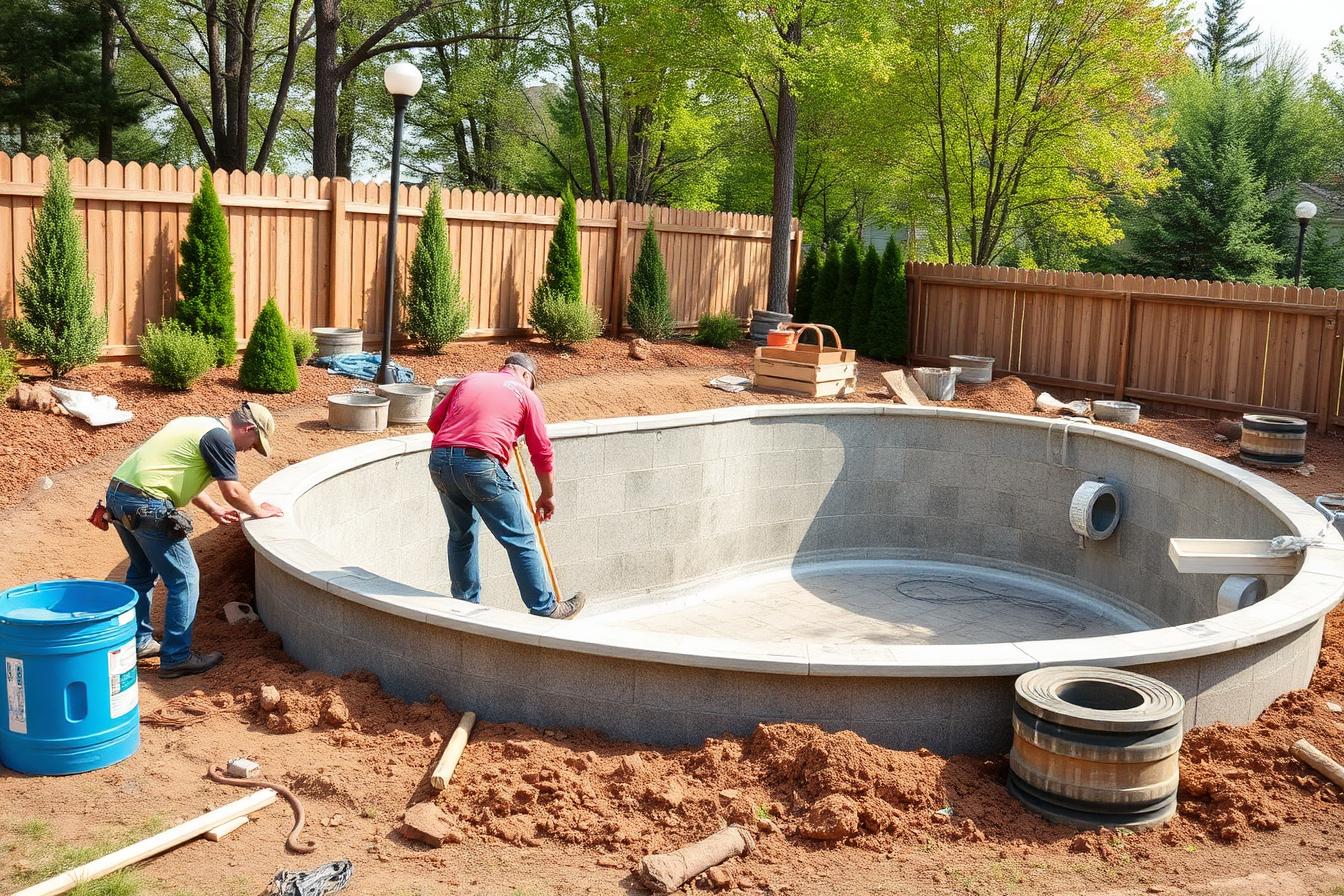
A semi-inground installation sets a pool partially into a excavated area, so the water sits perhaps two to three feet above grade instead of four-plus. Paired with a deck or a retaining wall on the exposed side, the result reads visually much closer to an inground pool while keeping most of the structural and cost advantages of an above-ground.
This approach is especially effective on sloped lots, which are common in Rapid City and in the newer developments around Sioux Falls. Rather than fighting the grade, you cut into the high side and deck out from the low side, and the slope becomes an asset — the pool ends up integrated into the landscape rather than perched on it.
The considerations are drainage and structure. Water must be able to move away from the buried portion of the wall; a French drain or a properly graded backfill is not optional in clay soil. And the pool model must be rated for partial burial, since not every above-ground structure can take lateral soil pressure. Doughboy's premium models are commonly installed this way, but confirm rating before excavating.
Cost lands between the two extremes, and so does timeline. For a lot of buyers in our market, semi-inground is the honest answer to 'I want the inground look but the inground budget makes me uncomfortable.'
Fiberglass inground: speed, smoothness and a fixed shape
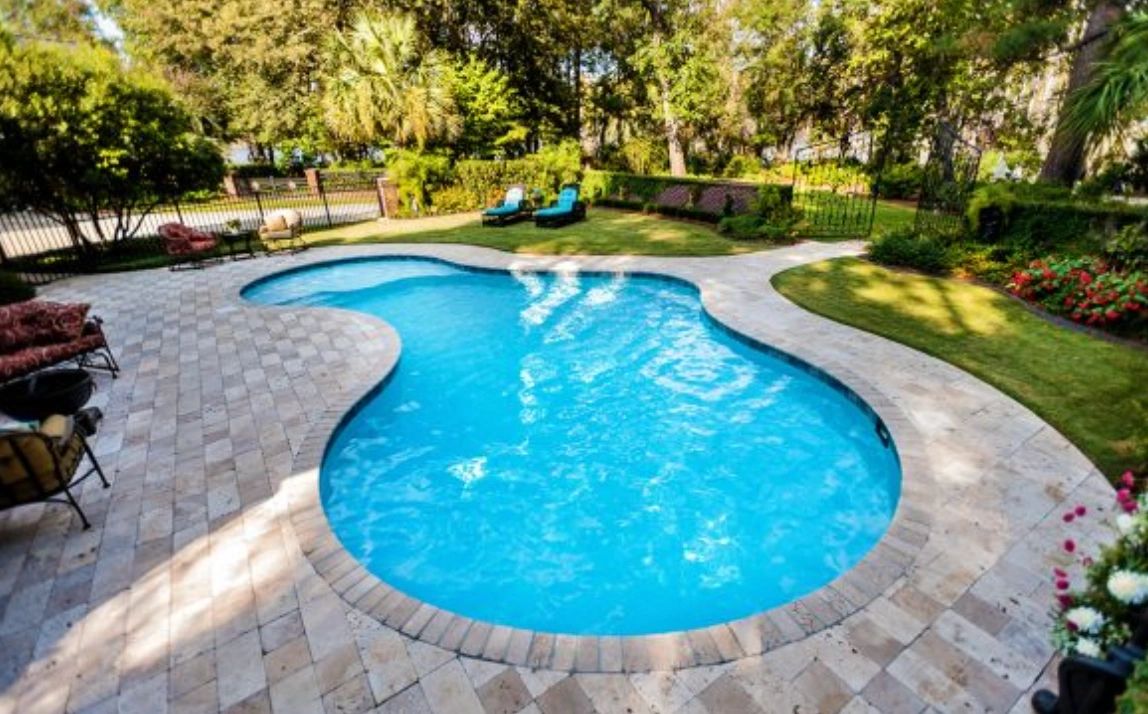
A fiberglass pool arrives as a single molded shell that gets set into an excavated hole, plumbed, backfilled and finished. Manufacturers like San Juan mold hundreds of shapes and sizes, from compact plunge pools to full-length lap and family designs with integrated benches, tanning ledges and steps.
The advantages are meaningful in our climate. The gel-coat surface is non-porous, which means it resists algae and requires less brushing and less sanitizer over the life of the pool than plaster. There is no liner to replace on a five-to-ten-year cycle. The shell has some flex, which handles the ground movement that freeze-thaw cycles produce better than rigid concrete. And installation runs weeks rather than the months a gunite pool typically takes — a genuine consideration when your entire construction window is April to October.
The limitations are shape and access. You choose from the manufacturer's molds rather than designing freely, and the shell has to physically reach the backyard, which means a crane and adequate access. Urban lots with narrow side yards and mature trees sometimes rule it out. Maximum widths are constrained by road transport.
Lifetime cost is where fiberglass tends to win against vinyl-lined inground pools. The higher up-front price is partially offset by no liner replacements, less chemical use and less surface maintenance across twenty-five years.
- Non-porous surface: less algae, less brushing, lower chemical demand.
- No liner replacement cycle.
- Weeks-long installation fits a short Midwest construction season.
- Shape limited to available molds; requires crane access to the site.
What Midwest conditions do to each option
Frost and freeze-thaw are the defining local variables. Every pool here gets closed, and how a structure handles a winter of ground movement matters. Above-ground pools sit on the surface and largely ride out frost heave; the primary winter risks are a collapsed cover under snow load and ice damage to skimmers and returns that were not properly winterized. Fiberglass shells flex with soil movement. Concrete and gunite pools are the most vulnerable to cracking from repeated freeze cycles in clay soil, which is one reason they are less common here than in southern markets.
Soil type matters just as much. Heavy clay expands when wet and shrinks when dry, exerting significant lateral pressure on any buried wall and complicating drainage. Sandy soil drains beautifully but requires more attention to backfill compaction and can shift under a shell. A good installer will tell you what is under your yard before quoting, and if nobody asks about soil, that is a warning sign.
Winterizing is an annual reality regardless of pool type. Lowering water below the skimmer, blowing out and plugging lines, adding winterizing chemicals, and installing a properly supported cover is a half-day job done right — and skipping steps is how people discover cracked skimmer bodies in April. Many of our customers simply have us close and open the pool each year and consider it part of the operating cost.
Finally, wind. The prairie moves a lot of air, and evaporation on an exposed pool is significant, both in water loss and in heat loss. Fencing, landscaping and a solar cover all pay back in reduced heating and fill costs.
Budget realistically: the numbers past the sticker price
The purchase price of the pool package is rarely more than half of the total project. Site work — excavation, grading, base material, sometimes retaining walls or drainage — is a major line item that varies enormously by lot. Decking, whether a wood surround on an above-ground or a concrete or paver patio around an inground, often approaches the cost of the pool itself. Fencing is typically required by code and is not cheap.
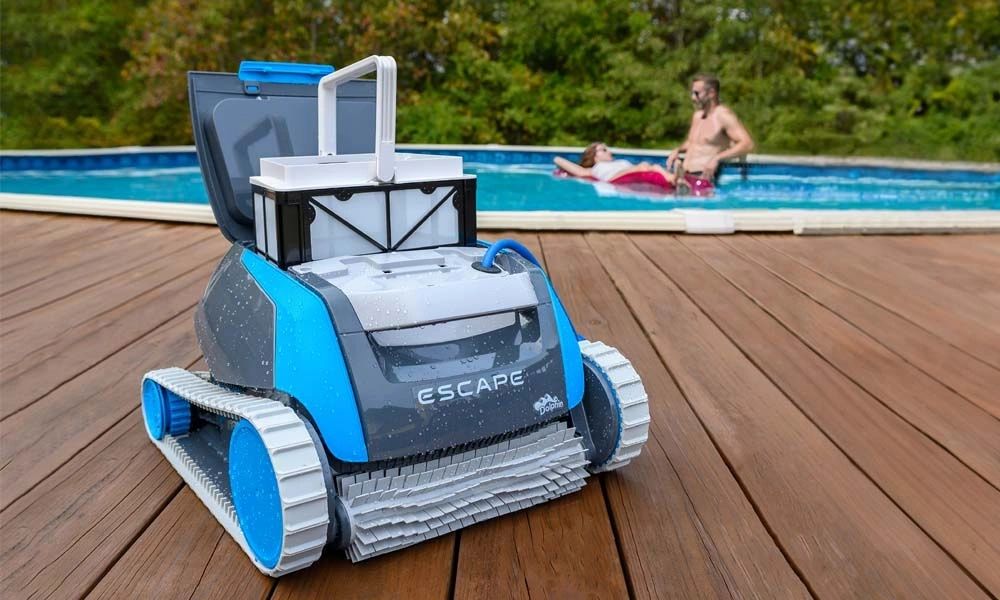
Then there is equipment: pump, filter, heater, automation, cleaner, cover, and possibly a saltwater chlorine generator. Each of these has a wide quality range, and this is one place where buying up front is genuinely cheaper long-term. A variable-speed pump costs more than a single-speed and saves its price difference in electricity in a couple of seasons.
Ongoing operating costs in our market usually run a few hundred to a couple thousand dollars a season depending on size and heating, covering chemicals, electricity, water, and opening and closing service. Vinyl liners need replacing roughly every 8-12 years for above-ground and inground vinyl pools alike.
Talk to your insurance agent before you build. A pool changes liability exposure and often requires an increase in coverage; the cost is modest but the surprise is not. Check municipal requirements too — fence height, gate self-latching, setbacks and permits vary between Sioux Falls, Sioux City, Rapid City and surrounding townships.
- Site work and decking often equal or exceed the pool package cost.
- Buy a variable-speed pump and a real cover up front.
- Budget a few hundred to a couple thousand per season in operating cost.
- Confirm fencing code, permits and insurance before signing anything.
Which pool for which household
Choose an above-ground pool if the primary users are children, if you might move within a decade, if the budget is a hard constraint, or if you want to be swimming this season rather than next. Pair it with a deck, a solar cover and a decent heater and it will deliver the overwhelming majority of the experience an inground pool provides in a Midwest summer.
Choose semi-inground if your lot slopes, if the above-ground aesthetic is the sticking point, or if you want a permanent-feeling installation without the full inground budget and timeline. It is the answer more often than most buyers realize.
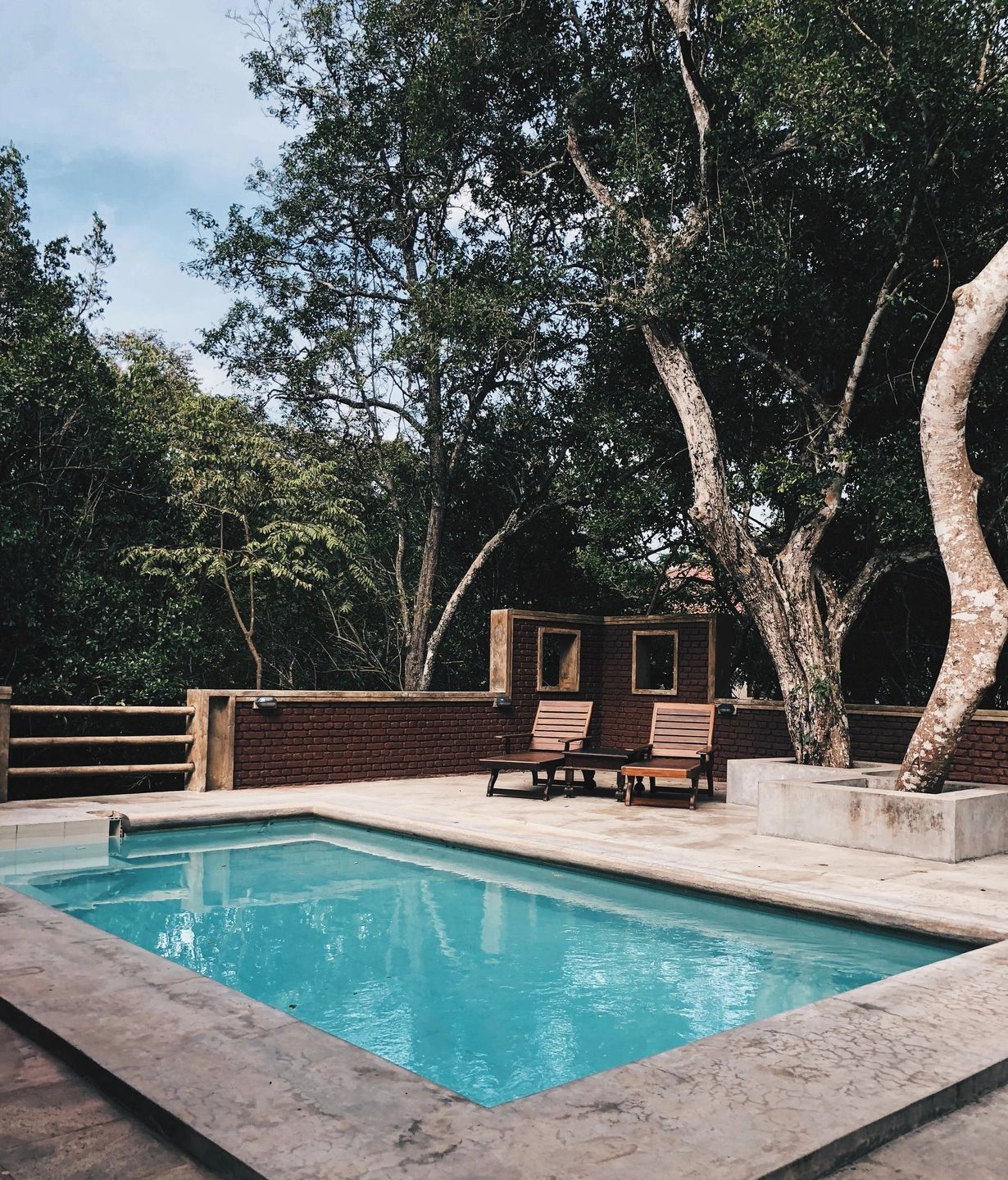
Choose fiberglass inground if this is a long-term house, if adults will use the pool as much as kids, if you want the lowest ongoing maintenance burden of any inground option, and if the site has crane access. It is also the strongest option if you plan to add extensive hardscaping, since the pool becomes an architectural element of the yard.
Whatever you choose, buy the installation as carefully as you buy the pool. The failure modes we see in year eight almost never trace back to the manufacturer; they trace back to a base that was not level, a backfill that was not compacted, drainage that was never addressed, or plumbing that was not properly winterized the first fall. A good local installer who will still be here in a decade is worth more than any spec sheet.
Planning your season
In our market, pool projects book out. If you want to swim in June, the conversation should start in January or February, and the site work should be scheduled for the first workable window after thaw. Waiting until Memorial Day to start shopping generally means a pool for next summer.
Start with a site visit. Grade, soil, utility locates, access for equipment, sun exposure, prevailing wind and the location of the house's electrical service all shape what is possible and what it costs. Most of the surprises in pool projects come from things visible in the first twenty minutes on-site.
Then think about the whole backyard, not just the water. The pools people love ten years later are the ones designed alongside their deck, shade, storage, lighting, seating and traffic flow. Splash City's outdoor living lines exist precisely because a pool without a comfortable place to sit next to it is only half a backyard.
Come see the options in person. All three showrooms carry pool packages, equipment and accessories, and our team will walk your specific site constraints and budget before recommending anything.
Frequently asked questions
Talk to the Splash City team
Showrooms in Sioux Falls, Sioux City and Rapid City. Bring a water sample, a room measurement or a backyard photo — we will help you plan it.
Flexible monthly payments with quick approvals and competitive rates — apply in minutes.